Whitepaper & Procurement Blueprint

Wholesale Networked Temperature Humidity Sensor Factory & Factories

Networked Telemetry Solutions

Explore our premium range of Ethernet, WiFi, and LoRaWAN environmental sensor gateways engineered for industrial robustness and high telemetry accuracy.
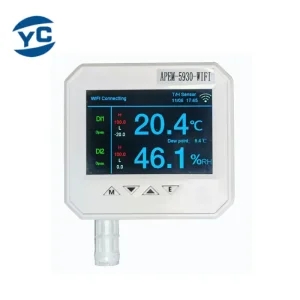
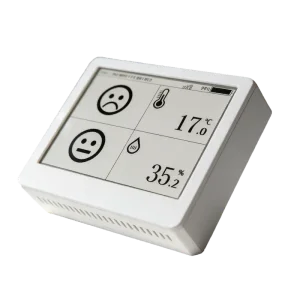
APEM-5930W Ethernet Temperature Humidity Sensor
Dual-Mode Network: Wired Ethernet + WiFi

Custom APEM-5930W Ethernet Temperature Humidity Sensor - Reliable China Suppliers & Factory for Smart Monitoring Solutions Manufacturer, Factory

Features an intelligent backup communication layout combining wired stability and wireless flexibility for mission-critical cleanroom networks.
View Specifications
APEM-5736 LORA Temperature and Humidity Sensor
LoRaWAN Long-Range Connection

Wholesale APEM-5736 LORA Temperature and Humidity Sensor from China Suppliers | Efficient Factory Solution for Monitoring Manufacturers, Factory

High-efficiency long-range transceiver layout built for wide agricultural monitoring and massive warehouse arrays with low power dissipation.
View Specifications
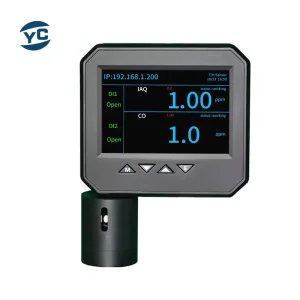
APEM-5930G Ethernet IAQ & CO Data Logger
Multi-Sensor: IAQ, CO, Temp & RH

Custom High-Performance APEM-5930G Ethernet IAQ & CO Data Logger - Trusted China Suppliers & Factory for Environmental Monitoring Supplier, Factory

An advanced indoor air quality monitoring node that integrates target carbon monoxide concentration tracking with standard temperature-humidity metrics.
View Specifications
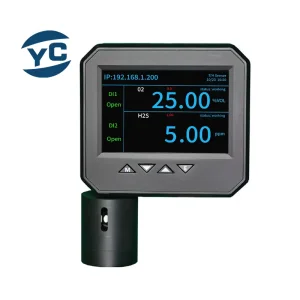
APEM-5930G Oxygen & Hydrogen Sulfide Data Logger
Industrial Gas Safety Integration

Wholesale APEM-5930G Oxygen & Hydrogen Sulfide Data Logger | China Suppliers & Factory for Industrial Environmental Monitoring Factory, Factories

Engineered for hazardous locations, combining O₂ depletion monitoring and toxic H₂S sensing in one high-integrity Ethernet transmitter.
View Specifications
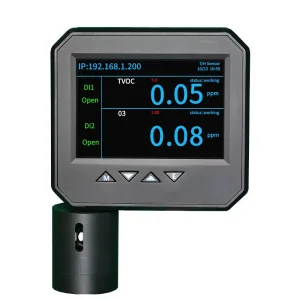
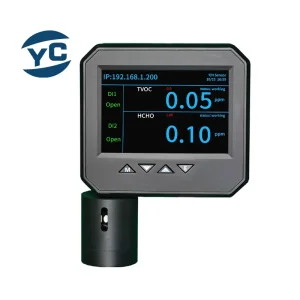
APEM-5930G TVOC and O₃ Ethernet Sensor
Active Chemical Telemetry

Wholesale APEM-5930G TVOC and O₃ Ethernet Sensor - China Suppliers & Factory for Comprehensive Air Quality Monitoring Manufacturer, Supplier

Simultaneously reads volatile organic compound concentrations and ozone levels alongside primary microclimate indicators over standard network architectures.
View Specifications
APEM-5930G Ethernet Multi-Parameter Sensor
CE Certified Multi-Parameter

CE Certification APEM-5930G Ethernet Multi-Parameter Sensor for TVOC, O₃, Temperature, Humidity | China Suppliers & Factory Suppliers, Factory

Fully compliant CE-certified telemetry instrument providing safe, multi-sensor environmental outputs directly through Ethernet ports.
View Specifications
APEM-5930G Ethernet IAQ & CO Data Logger
Industrial Modbus & TCP/IP

Custom APEM-5930G Ethernet IAQ & CO Data Logger | High-Performance China Supplier & Factory for Temperature and Humidity Monitoring Manufacturer, Manufacturers

A high-precision industrial log module integrating Swiss sensor core chips to ensure reliable climate data logging with minimal long-term drift.
View Specifications
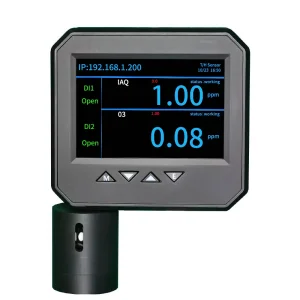
APEM-5930G IAQ & Ozone Data Logger
High-Performance IAQ & O₃

Wholesale High-Performance APEM-5930G IAQ & Ozone Data Logger for Temperature & Humidity - China Suppliers & Factory Suppliers, Factory

Dual-zone cleanroom telemetry logger ideal for clean chambers, biological vaults, and air scrubbing system verification projects.
View Specifications

Industrial Telemetry Evolution: The Rise of Networked Temperature Humidity Sensors

Modern industrial operations have transitioned from localized, loop-based analog measurement to distributed, digital telemetry. Historically, factories and warehouses relied on analog 4-20mA or 0-10V signals connected to local controllers. Today, networked temperature and humidity sensors operate as smart edge nodes in the Internet of Things (IoT) landscape. These sensors connect directly to network switches via Ethernet (PoE), communicate across long distances using wireless protocols (LoRaWAN, Wi-Fi), and stream data to centralized building management systems (BMS), SCADA platforms, and enterprise cloud applications.

"The integration of environmental sensors directly into IP-based networks has eliminated intermediate field wiring, minimized signal conversion errors, and empowered facilities with real-time, microsecond-accurate microclimate data."

Key Global Industry Development Trends

Three critical technical trends shape the networked sensor industry today:

  • Multi-Parameter Sensor Clustering: Industrial facilities prefer single, integrated nodes over multiple separate devices. By combining temperature, relative humidity, dew point, atmospheric pressure, and specific indoor air quality indicators (such as TVOC, HCHO, CO, O₂, and H₂S) into one compact housing, enterprises reduce installation and networking costs.
  • Power over Ethernet (PoE) Standardisation: IEEE 802.3af/at (PoE) has emerged as the standard interface for modern indoor installations. Using a single RJ45 cable to carry both DC power and high-speed data simplifies installation, reduces reliance on local power grids, and allows central UPS networks to back up all sensors during power outages.
  • Edge Logging and Redundant Protocols: Modern sensors feature local flash memory to cache environmental data during network outages. When connection is restored, the cached data is automatically synchronized back to the primary database, ensuring zero-gap record compliance for critical audits.

Global Enterprise Procurement Demands

When procurement officers and technical leads evaluate sensor factories, they look beyond basic price points to assess total cost of ownership (TCO) and long-term data integrity:

  • Interoperability and Open Communication: Hardware must natively support standard communication protocols such as Modbus TCP, SNMP (v1/v2c/v3), HTTP/HTTPS API JSON post, MQTT, and BACnet/IP to allow seamless integration into diverse SCADA systems without proprietary middleware.
  • Sensor Core Quality and Long-Term Stability: The precision of a temperature and humidity transmitter depends heavily on its internal sensing element. Premium sensor factories use Swiss-imported Sensirion cores or German-manufactured RTD elements to ensure accuracy (e.g., ±0.3°C, ±2% RH) and low annual drift (<0.05°C/year).

Why E-E-A-T Matters

When designing safety-critical or audit-compliant monitoring systems (such as FDA 21 CFR Part 11 facilities or data center containment loops), sourcing components from a factory with verified engineering expertise, international quality standards, and deep technical documentation is essential.


Key Certifications Required:

CE Compliant FCC Approved RoHS Certified ISO 9001:2015

About Yingchuanglihe

A leading manufacturer of high-precision environmental monitoring sensors, delivering reliable data support for intelligent environmental control across all industries.

18+
Years Experience
1500+
Workshops (m²)
5+
Production Lines
100+
Staff Members

Our Operational Strength & Capabilities

Beijing Yingchuanglihe Electronic Technology Co., Ltd. integrates R&D, production, and sales at our modern manufacturing base in Beijing. Over nearly two decades of environmental engineering, we have developed robust competitive advantages:

  • Profound technical expertise with nearly 20 years of field-proven sensor engineering.
  • Strong R&D capabilities offering rapid-prototyping OEM/ODM customization services.
  • High-precision sensing nodes powered by imported Swiss and German core sensor chips.
  • Fully certified product compliance including CE, FCC, and RoHS listings.
  • Native multi-protocol support (SNMP, Modbus TCP, MQTT) for simple enterprise network integration.
  • Five automated production lines providing predictable lead times and reliable capacity.
  • Professional tech support engineering desk with a guaranteed 8-hour response.

Company History & Milestone Achievements

A chronological journey of innovation, technological milestones, and strategic global partnerships.

2007

Company founded in Beijing. Developed our initial intelligent environmental monitoring terminal powered by TCP/IP network protocol alongside the first-generation environmental monitoring system software.

2008

Partnered with Mocha Software, a leading Chinese network management platform provider, to launch the TH-5939 series SNMP-enabled environmental monitoring nodes.

2009

Collaborated with Switzerland's COMLAB to design and introduce the TH-5869 IP-rated Ethernet environmental logger, deployed across Chinese high-speed railway projects (Beijing-Kowloon, Beijing-Shanghai, Wuhan-Guangzhou railway links).

2010

In partnership with Founder Technology, launched the APEM-6100 Ethernet environmental unit, pioneering early implementation of Power over Ethernet (PoE) technology in commercial climate monitors.

2012

Formed a manufacturing and supply chain alliance with Taiwan's Foxconn, establishing Yingchuanglihe environmental sensors as standard infrastructure for automated electronics workshops.

2015

Partnered with Baidu to launch the next-generation APEM-5900 Ethernet intelligent monitoring terminal, successfully deployed across Baidu's Yangquan Data Center to optimize server room cooling.

2018

Introduced a multi-scenario smart solutions platform, expanding environmental telemetry deployments from indoor data centers into decentralized smart city utility corridors.

2019

Launched the integrated outdoor cabinet monitoring system, deployed in highway projects including the Huawei and China Merchants Huaruan ETC expressway initiatives.

2021

Engaged in the R&D and design of Beijing's high-level autonomous driving test boxes and edge computing gateways, providing reliable roadside environmental monitoring systems.

2023

Contributed to the building of modern intelligent computing centers, supplying telemetry nodes to manage heat distribution in high-density AI processing environments.

2024

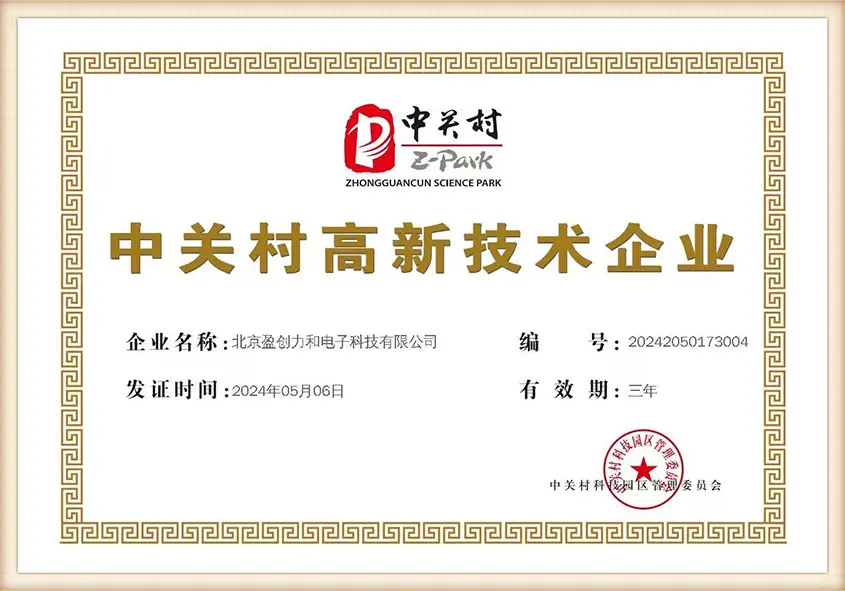
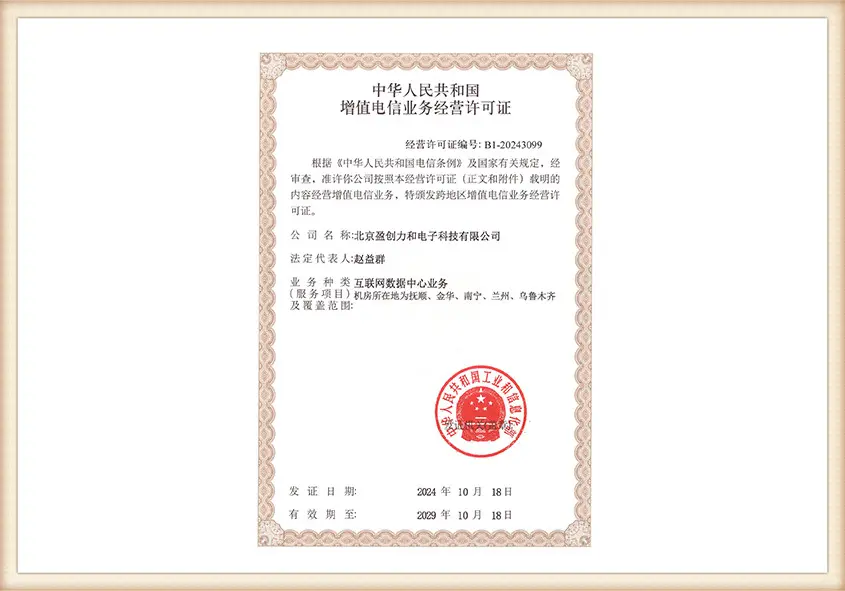
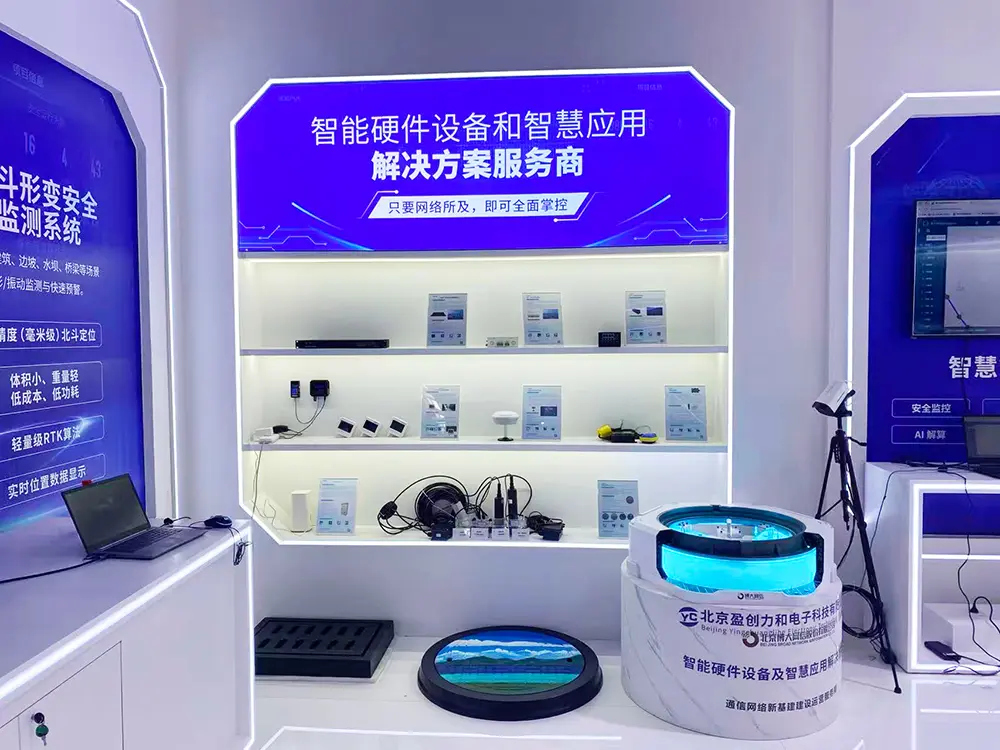
Established joint business divisions with Beijing Enterprises Water Group and co-founded a specialized Beidou high-precision mapping division with the Beijing University of Civil Engineering and Architecture. Achieved breakthroughs in smart pipeline monitoring and obtained formal IDC business qualifications.

China Factory 4.0: Supply Chain Resilience & Manufacturing Advantages

The landscape of global hardware procurement has shifted focus from low labor costs to supply chain stability, design speed, and manufacturing technology. Sourcing environmental sensors from a modern, Beijing-based facility like Yingchuanglihe offers key advantages under the China Factory 4.0 framework.

1. Fully Integrated Components Sourcing

Yingchuanglihe's location provides direct access to China's electronics ecosystem. This local integration reduces lead times for critical materials—from custom-molded plastics to multi-layered PCBs and low-power microcontrollers. Combined with high-precision imported chips from Switzerland and Germany, this allows us to deliver reliable sensors with shorter production cycles than international competitors.

2. Automated Production Lines

Equipped with 5 automated production lines, the factory uses advanced pick-and-place machinery, automated optical inspection (AOI), and environmental calibration chambers. This automation ensures high product uniformity and stability, keeping batch-to-batch variation to a minimum.

"For global buyers, supply chain resilience is determined by calibration stability. Yingchuanglihe uses automated multi-point thermal and humidity chambers to pre-calibrate each device, ensuring plug-and-play installation."

3. OEM/ODM Design Flexibility

Enterprise applications often require specific modifications, such as customized probe lengths, specialized network protocols, or branded physical enclosures. Yingchuanglihe's R&D team manages the entire process from initial schematic design and firmware optimization to prototype production and compliance testing, accelerating project rollout.

Production Capabilities

  • Capacity: Over 100,000 sensor nodes annually.
  • Quality Check: 100% full inspection and testing.
  • Calibration: Traceable to national standards.
  • Prototypes: Custom designs ready within 15-30 working days.

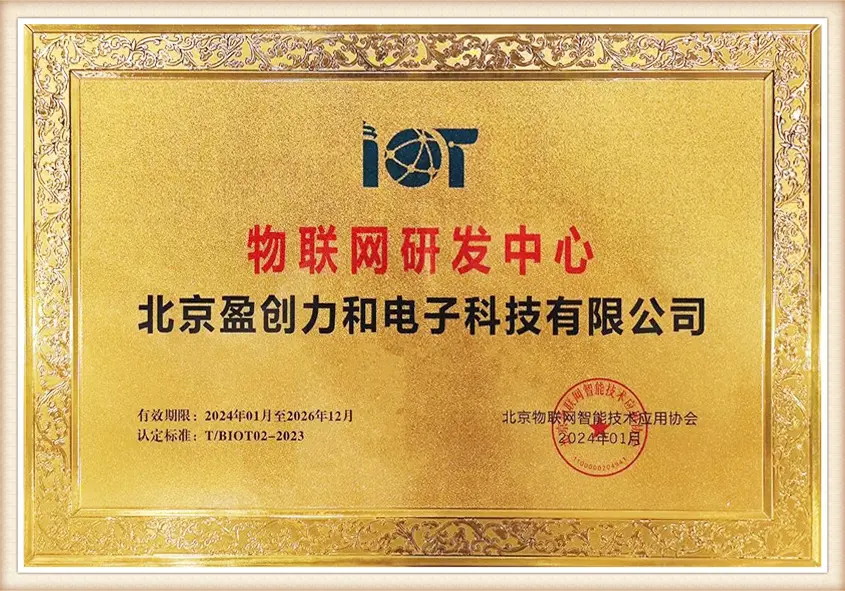
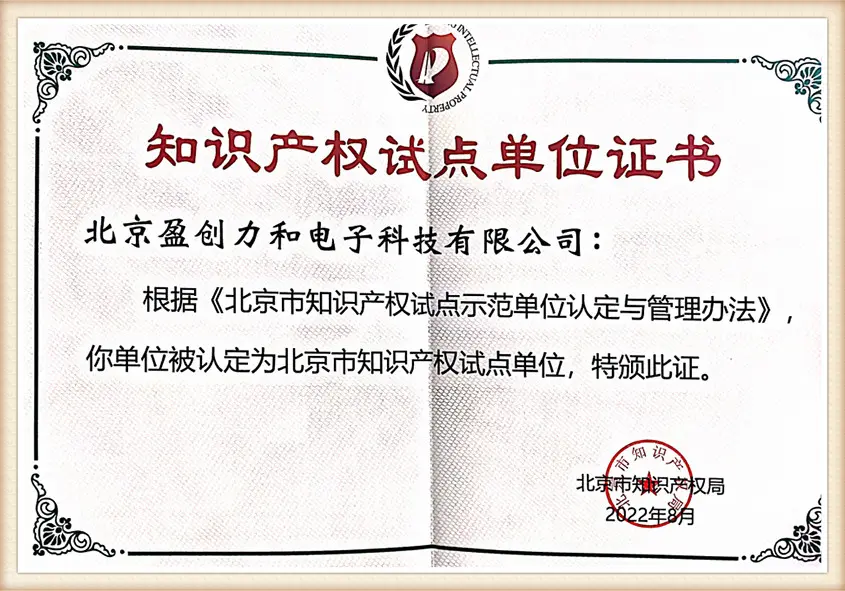
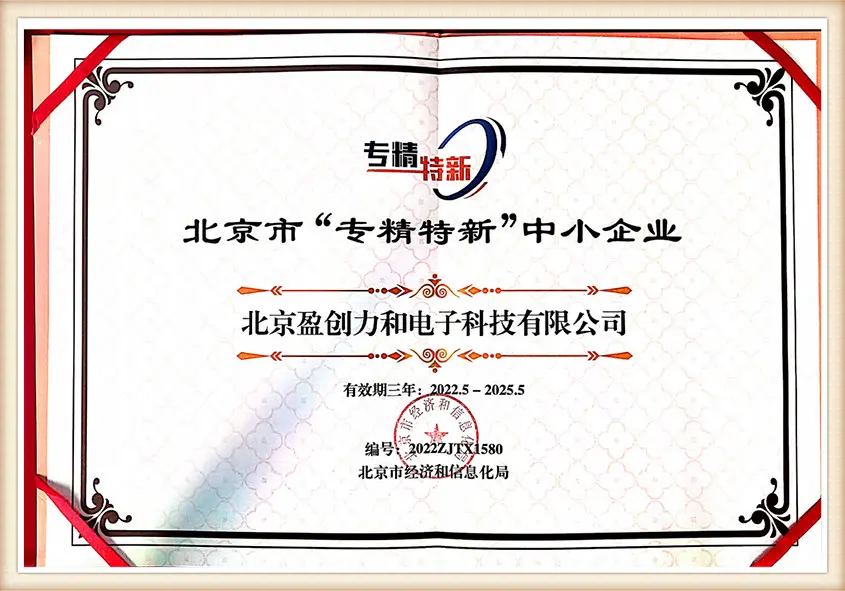
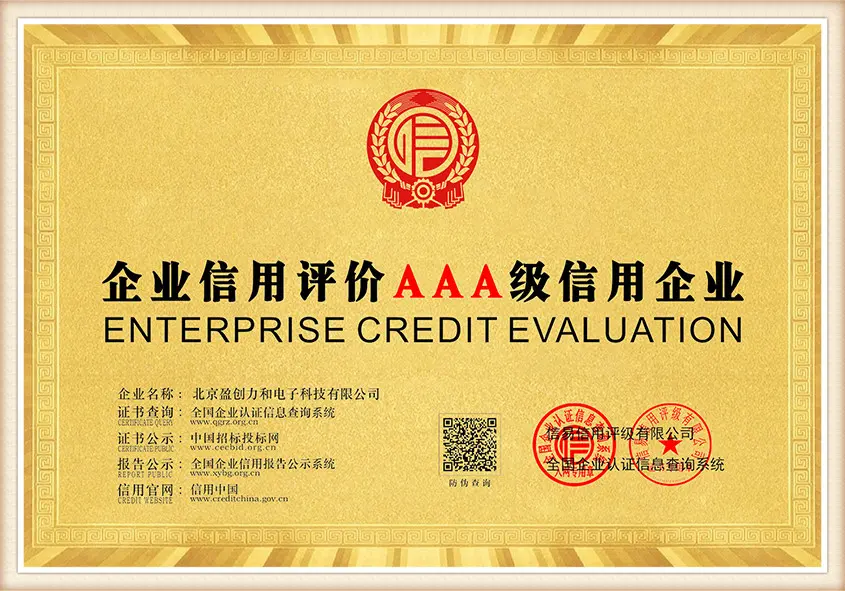
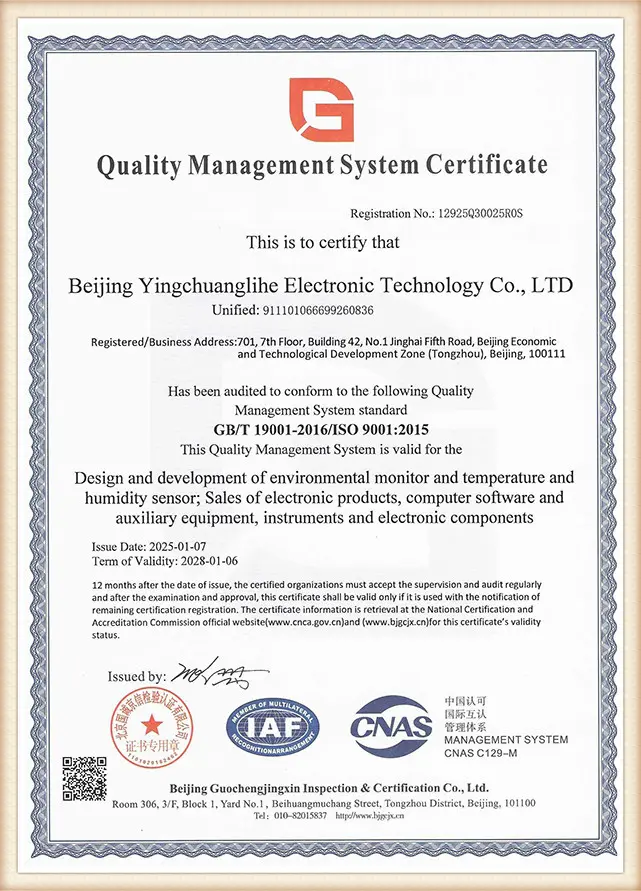
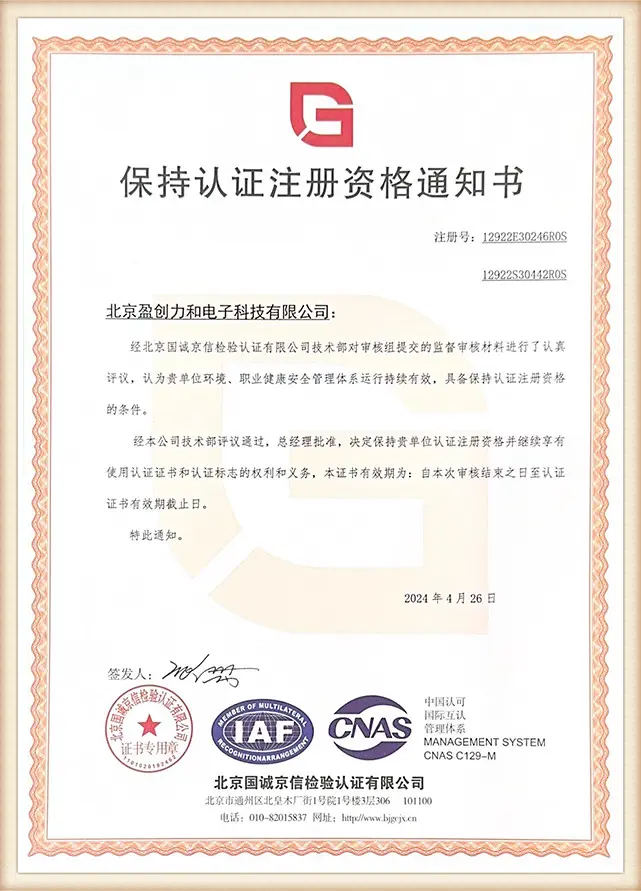
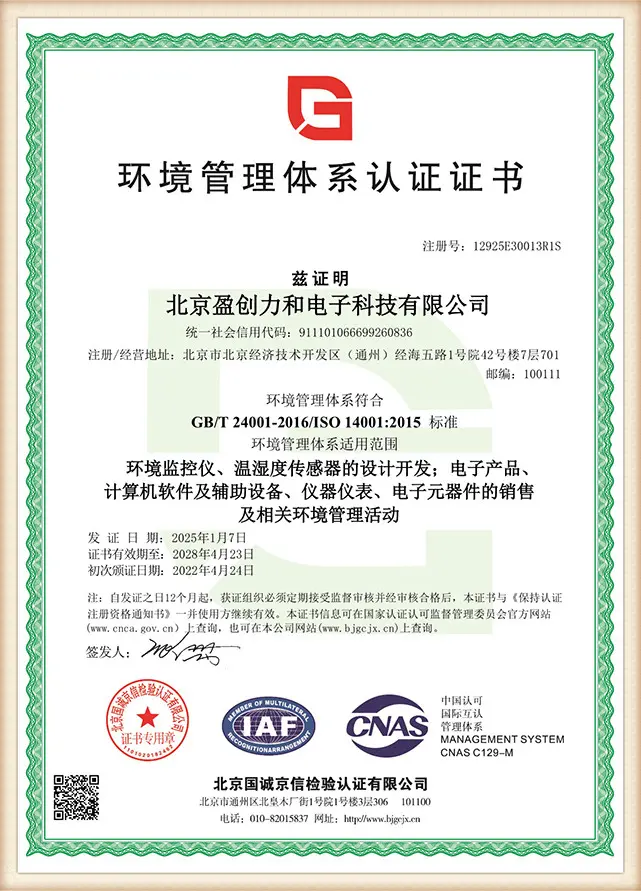
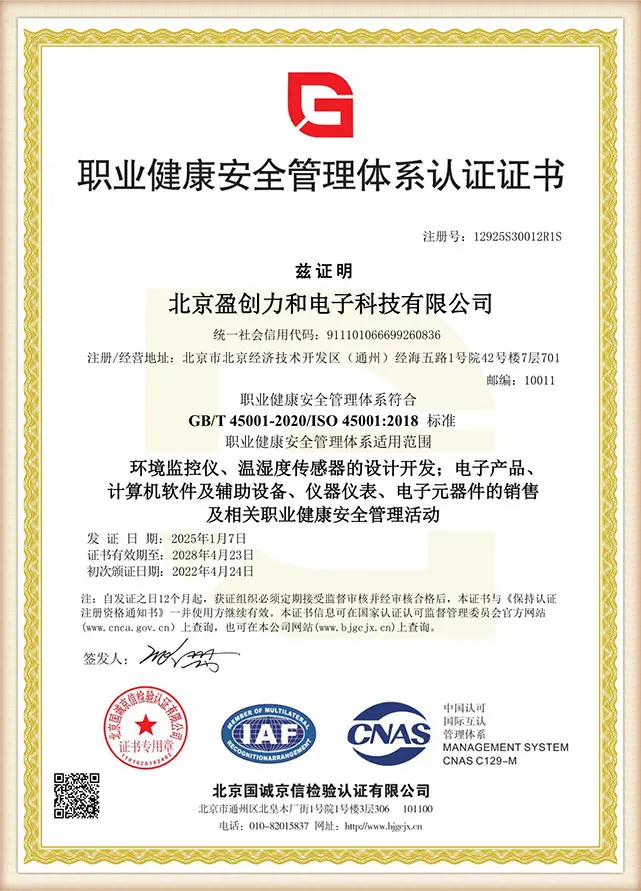
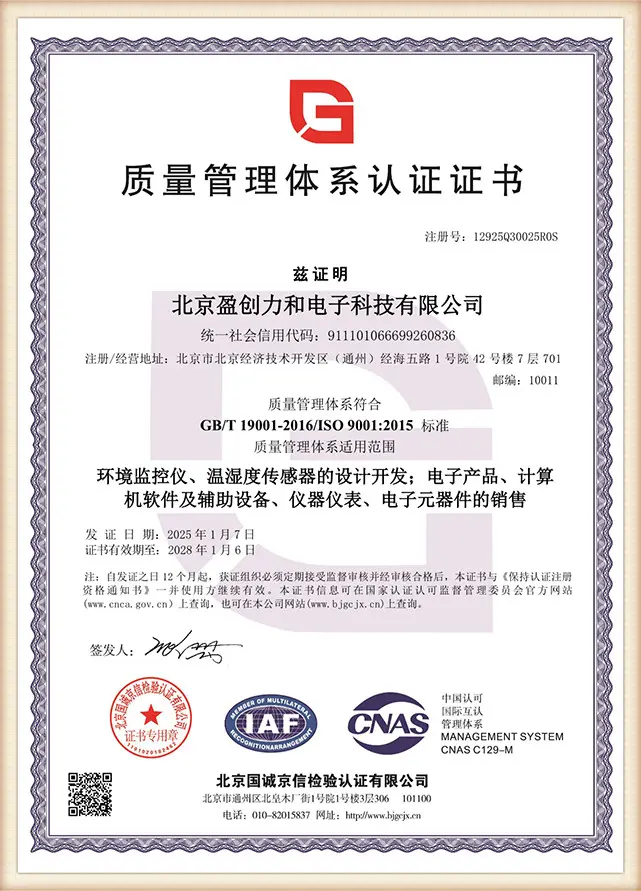
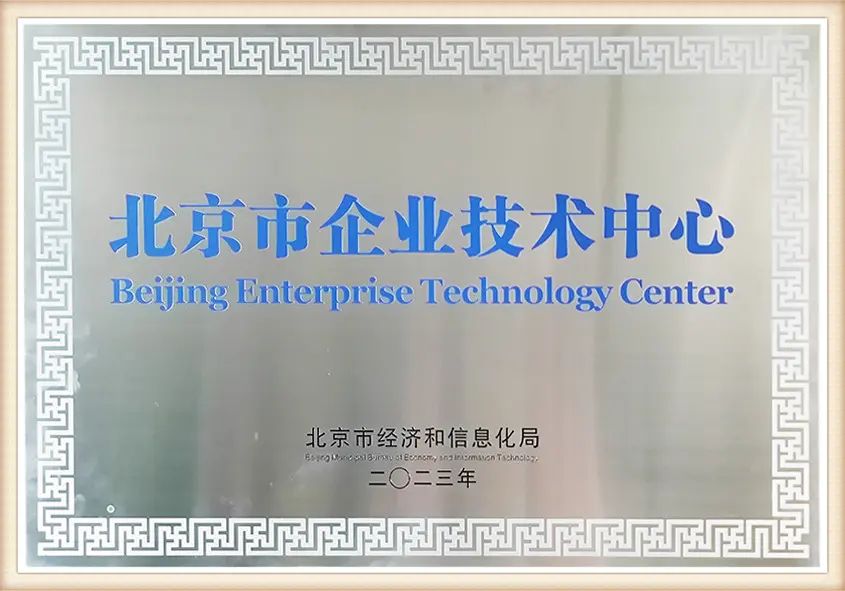
Enterprise Quality Certificates

We maintain strict ISO-certified manufacturing environments. Each product undergoes rigorous testing for electromagnetic compatibility (EMC), ingress protection, and thermal reliability before shipment.
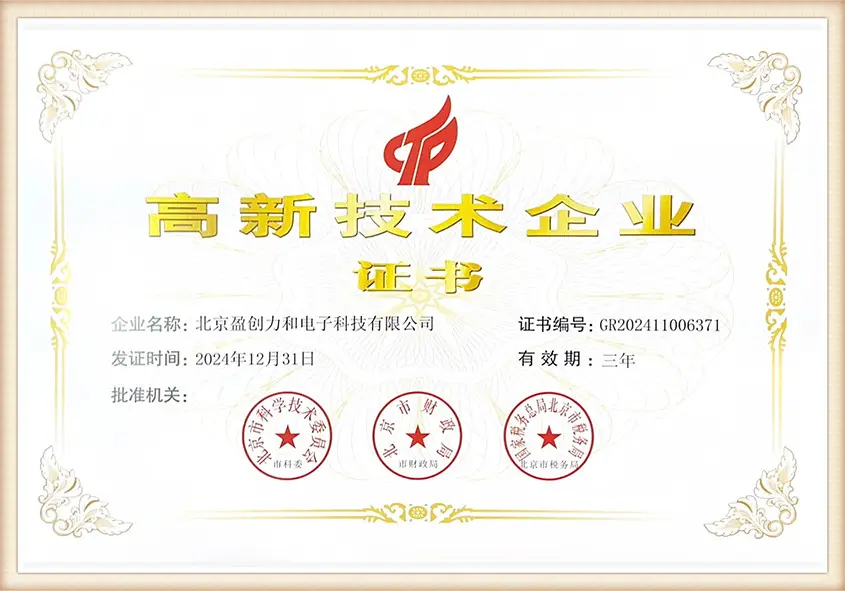
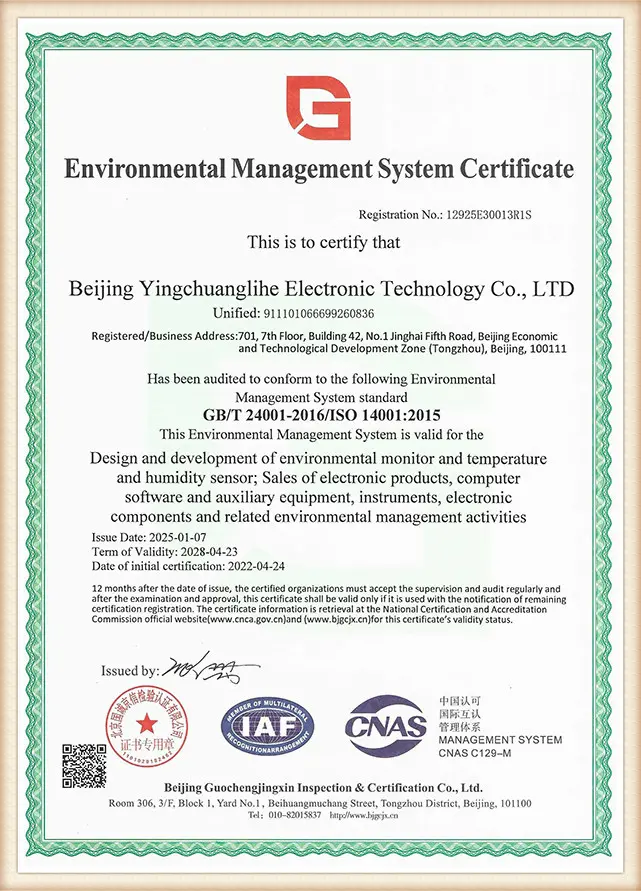
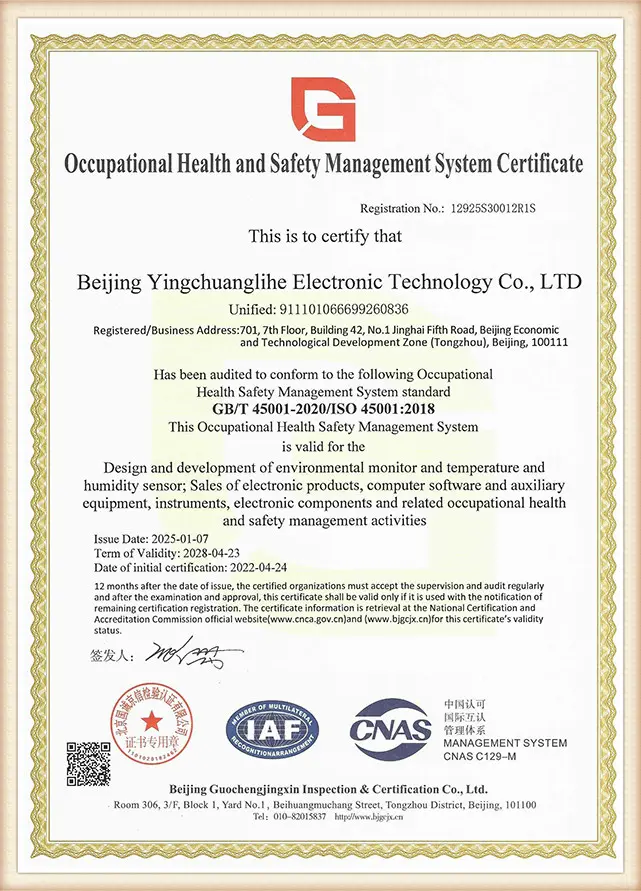
Product Compliance & Testing

Our environmental sensor modules are tested by third-party laboratories to verify compliance with international regulations for industrial and commercial environments.
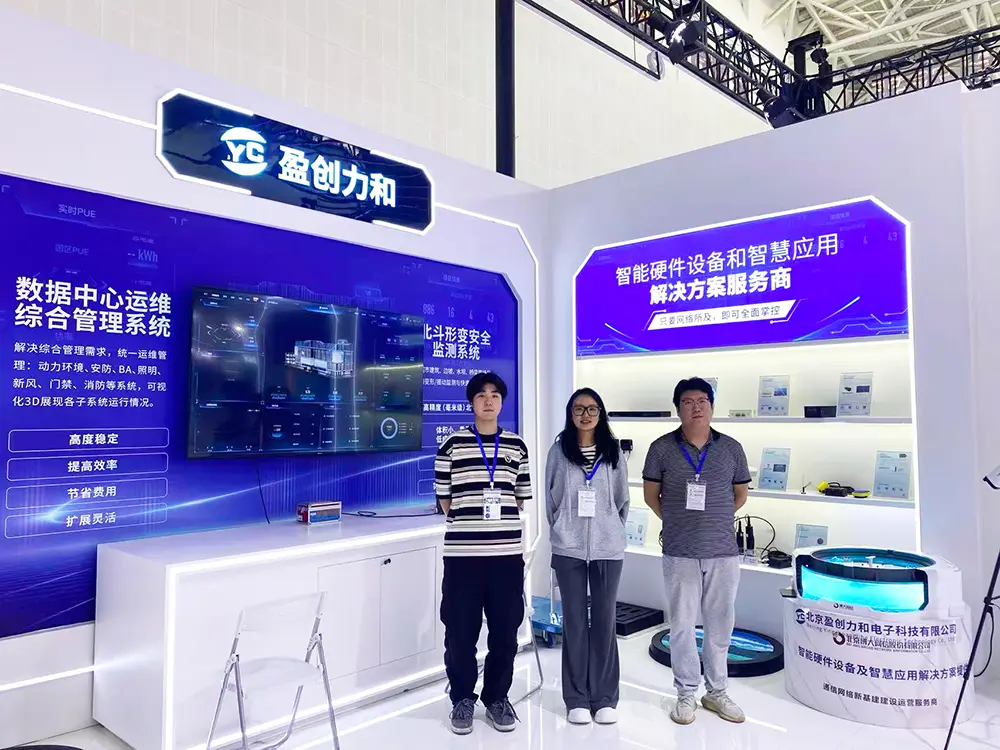
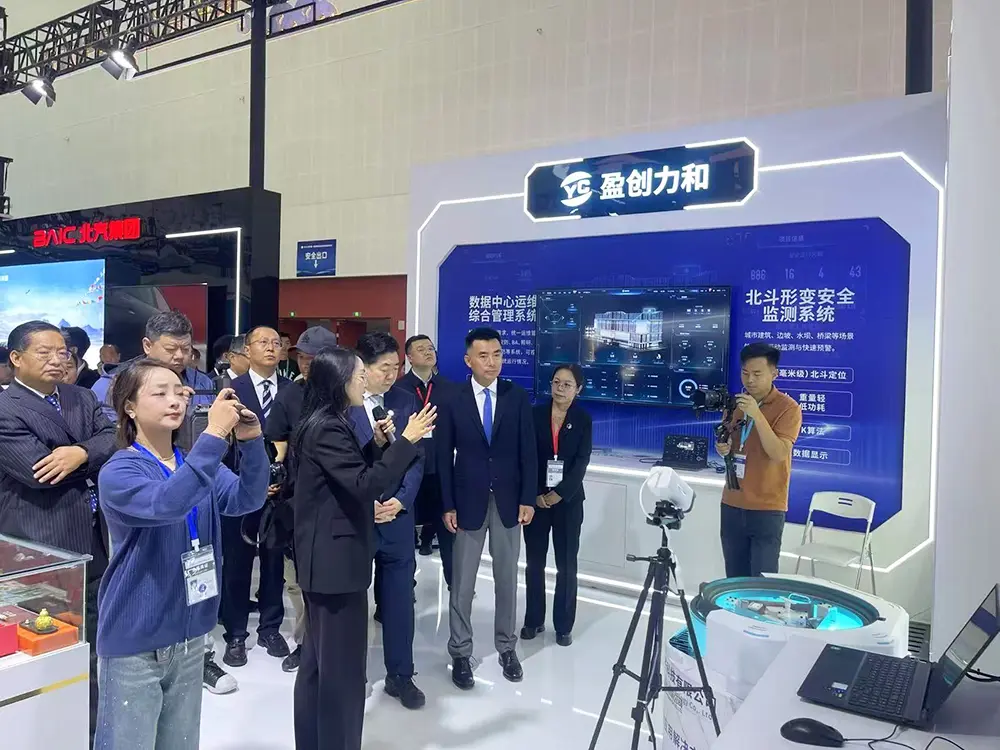
International Presence & Exhibitions

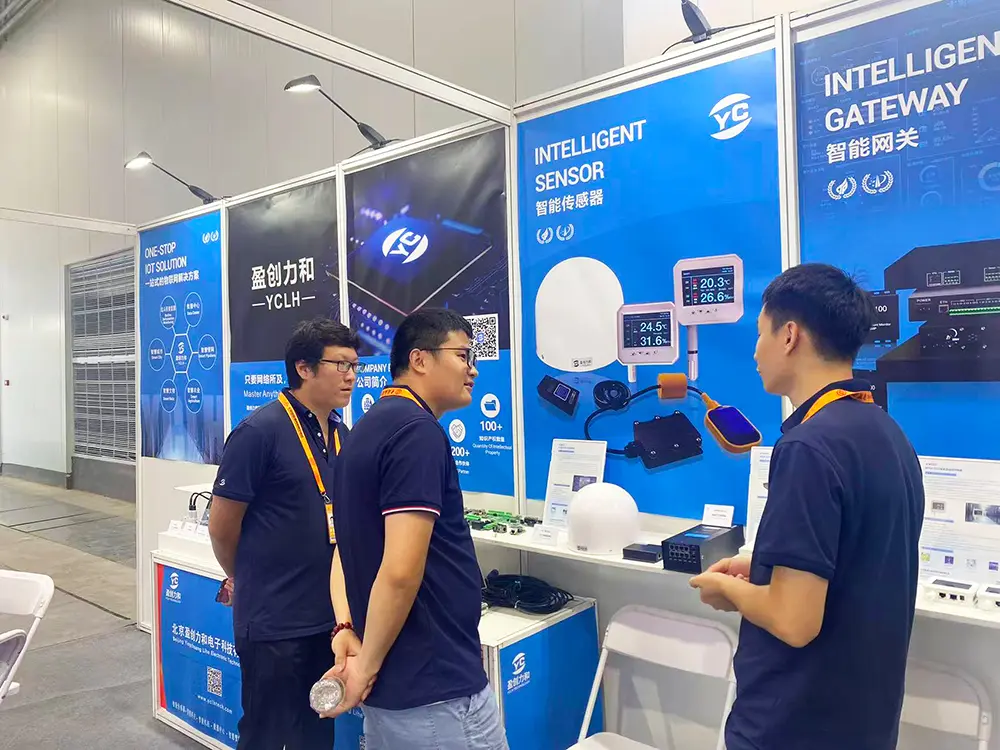
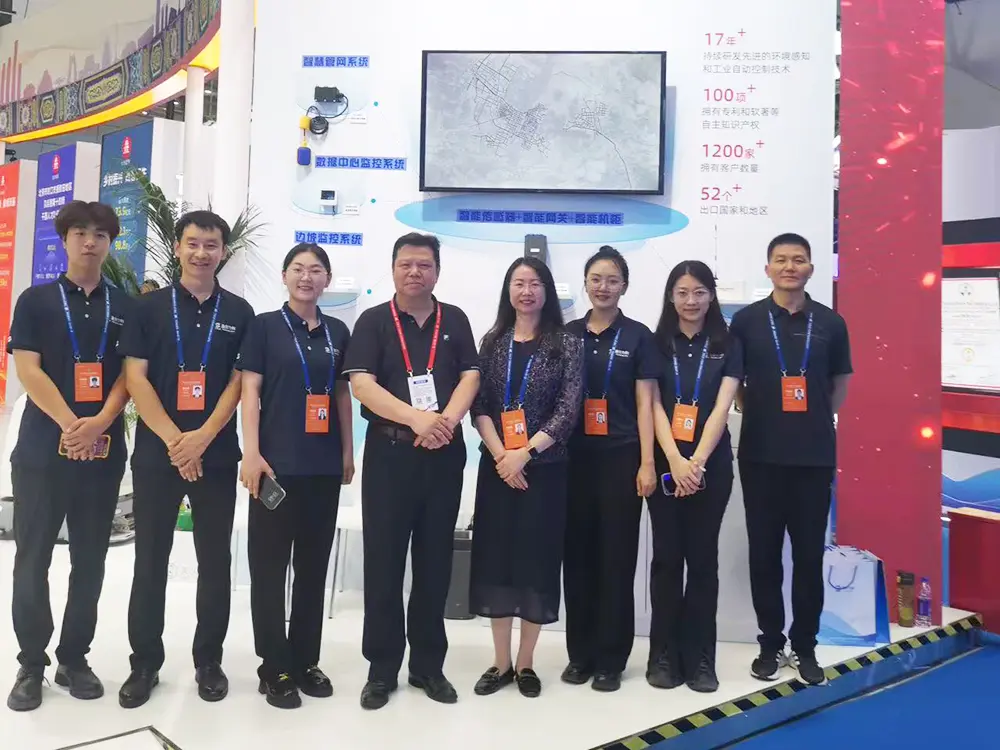
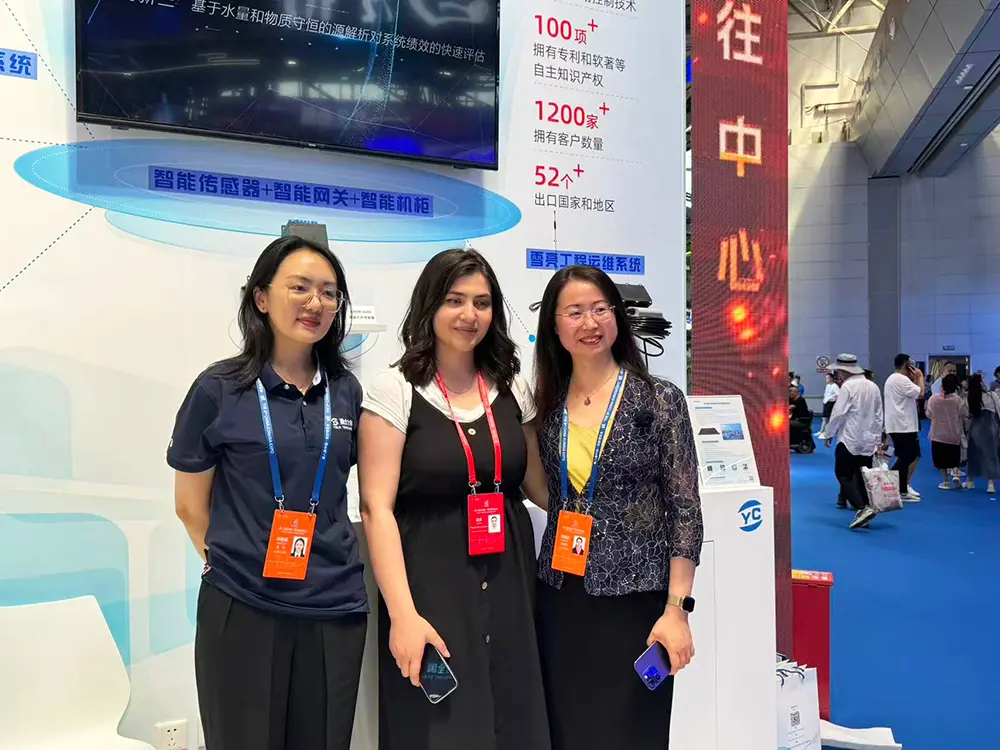
Yingchuanglihe products are used globally, supported by active participation in international technology, IoT, and industrial automation events.
Cross-Industry Application Architectures

Our environmental sensor modules are deployed globally across challenging commercial and industrial environments.

Data Center Environmental Telemetry

Data Centers & Server Rooms

High-density server layouts require microclimate monitoring to prevent hot spots. Deployed PoE sensors measure temperature distribution and dew points, helping cooling systems optimize power usage effectiveness (PUE).

Lab and Cleanroom Monitoring

Labs & Sterile Cleanrooms

Pharmaceutical manufacturing and semiconductor fabrication require strict climate control. Multi-parameter sensors measure pressure differences, relative humidity, and trace gases to prevent cross-contamination.
Industrial Manufacturing Floor

Industrial Automation

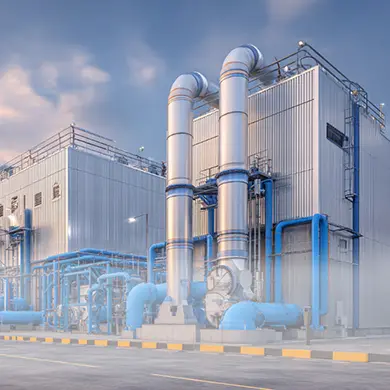
Automated factory floors depend on stable environmental conditions to keep machinery running smoothly. Heavy-duty Modbus TCP and RS485 transmitters track temperature, relative humidity, and air quality metrics.

Communication Networks Infrastructure

Telecom & Base Stations

Remote telecom cabinets and cellular base stations operate under varying outdoor climates. Compact, SNMP-compatible sensors help maintenance teams identify cooling failures before hardware shuts down.

Smart Utility Wells

Smart Utility Wells & Pipelines

Underground utility chambers face damp conditions and potential gas build-ups. Robust LoRaWAN and IP-rated sensors monitor humidity, water ingress, and gas concentrations over long distances.

Military & Government Archives

Defense & Secure Storage

Defense archives and high-security government records facilities require precise, stable environmental control to protect materials. Our secure, CE/FCC certified sensors maintain stable conditions without compromising networks.

Global Industrial Status & Localized Application Scenarios

The adoption of networked sensing technologies varies by region, driven by local regulatory frameworks and industrial requirements. Understanding these localized trends helps global supply chain managers optimize their equipment specifications.

North American & European Markets: Regulatory Compliance & Decarbonization

In North America and Europe, sensor installations are heavily influenced by regulatory compliance and energy optimization initiatives. In pharmaceutical facilities, environmental data logging must comply with FDA 21 CFR Part 11 and EU GMP Annex 11, requiring detailed electronic signatures and unalterable audit trails. At the same time, efforts to reduce greenhouse gas emissions drive the use of real-time temperature and humidity data to run heating, ventilation, and air conditioning (HVAC) systems more efficiently, minimizing over-cooling in data centers.

Asia-Pacific Market: High-Density Electronics & Cleanroom Integration

The Asia-Pacific region is a major hub for semiconductor and high-density electronics manufacturing. These cleanroom facilities require strict control over relative humidity to prevent electrostatic discharge (ESD) and manage chemical outgassing. The use of multi-parameter sensors—which measure humidity, TVOC, and differential pressure in a single node—helps chip manufacturers monitor air quality across their fabrication bays.

Localized Application Scenario: Cold Chain Logistics & Storage

"For pharmaceutical cold chain storage, monitoring air temperature is not enough. Sensor probes must be positioned to track internal air pockets, and network nodes must switch dynamically between Ethernet power and local battery backups during utility outages."

In specialized logistics warehouses, temperature variations can compromise vaccine stability or food quality. Deployed sensors must provide rapid response times (T90 < 4 seconds) and support flexible probe extensions. This allows the primary network interface to remain outside the cold room, protecting the electronics from condensation damage.

Custom OEM/ODM Services

Yingchuanglihe offers tailored design services to adapt environmental sensors to specific local requirements:

  • Customized physical housings (such as IP65, IP67, or chemical-resistant plastics).
  • Firmware adjustments for specific Modbus mapping or SNMP registers.
  • Branded product labeling and customized retail packaging.
  • Flexible, multi-length cable probes for remote measurements.

Technical Q&A: Environmental Telemetry Systems

Expert answers addressing network integration, sensor performance, and calibration requirements.

Q1: What are the main benefits of using Power over Ethernet (PoE) in environmental sensors?
Power over Ethernet (PoE) allows a single RJ45 cable to carry both DC power and data, eliminating the need for local electrical outlets near each sensor. This simplifies installation, reduces wiring costs, and allows central UPS networks to back up all sensors during power outages, ensuring continuous data logging.
Q2: How do Swiss and German sensor cores improve telemetry performance?
Swiss-imported Sensirion capacitive polymer cores and German RTD (Platinum resistance) elements provide high measurement accuracy (typically ±0.3°C and ±2% RH) and low annual drift (<0.05°C/year). This reduces the frequency of recalibration and ensures more reliable data for audit-compliant facilities.
Q3: How does Yingchuanglihe ensure long-term stability and calibration consistency?
Every sensor undergoes multi-point temperature and humidity calibration in automated chambers against reference instruments. The calibration parameters are saved directly to the device's internal EEPROM, preventing signal drift over years of industrial operation.
Q4: Which network protocols are recommended for data centers versus utility corridors?
For data centers, Ethernet-based protocols like SNMP (v1/v2c/v3) and Modbus TCP are preferred for high-speed integration into building management systems. For utility corridors or remote storage warehouses, LoRaWAN is recommended because it can transmit signals over long distances and through concrete walls with low power consumption.
Q5: Can these environmental sensors integrate directly into third-party BMS platforms?
Yes, our devices natively support open-standard communication protocols including Modbus TCP, SNMP, and HTTP API (JSON format). This design allows simple integration into standard building management system (BMS) and SCADA platforms without proprietary software.
Q6: What is the typical lead time for custom OEM/ODM sensor designs?
For standard modifications like custom cable lengths or housing adjustments, prototypes are ready in 15 working days. Full custom projects, including unique PCB designs and new sensor integrations, generally take 30 to 45 working days, followed by full volume production.

Industrial-Grade Environmental Loggers & Gateways

Select from our heavy-duty environmental transceivers, designed to maintain accuracy and stable network connections in challenging environments.
APEM-5930 Power over Ethernet Sensor
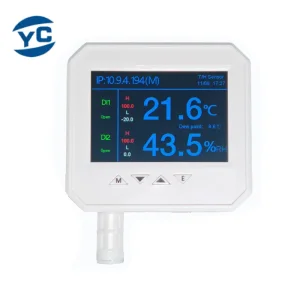
Direct PoE: IEEE 802.3af

China APEM-5930 Power over Ethernet Temperature and Humidity Sensor - China Suppliers Factory with Customization Options Manufacturers, Factories

Our flagship PoE-powered sensor node, providing accurate temperature, relative humidity, and dew point measurements with simple, single-cable installation.
View Specifications
APEM-5930E Ethernet Sensor with Optional Probes
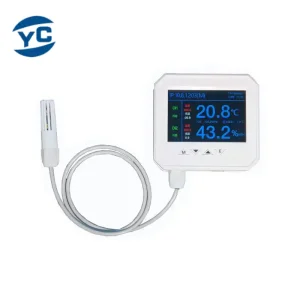
Detached Sensor Cable Probe

China APEM-5930E Ethernet Temperature Humidity Sensor - China Suppliers and Factory with Optional Probes Manufacturer, Factories

Features a separate, external sensor probe connected via cable. This design keeps the primary network electronics outside of cold storage or high-humidity environments.
View Specifications
APEM-5930G TVOC & HCHO Ethernet Data Logger
Air Pollutants: HCHO & TVOC

Custom China APEM-5930G TVOC & HCHO Ethernet Data Logger, Humidity & Temperature Sensor - Suppliers & Factory Supplier, Factory

Designed for smart buildings and green building compliance, monitoring formaldehydes and total volatile organic compounds over standard networks.
View Specifications
APEM-5930G Ethernet Data Logger
All-in-One: IAQ, CO & Microclimate

Custom APEM-5930G Ethernet IAQ & Carbon Monoxide with Temperature &Humidity Data Logger Manufacturer, Manufacturers

Integrates electrochemical carbon monoxide sensors and environmental indicators to protect occupants in underground parking lots and loading bays.
View Specifications
APEM-5930G Ethernet IAQ & CO Sensor
Cleanroom Environment Monitoring

China APEM-5930G Ethernet IAQ & CO Sensor - China Suppliers & Factory for Temperature, Humidity Monitoring Suppliers, Factory

A high-precision environmental transmitter designed for stable monitoring in cleanrooms, laboratories, and sensitive industrial zones.
View Specifications
APEM-5930P Ethernet Sensor
Barometric Pressure Integration

CE Certification APEM-5930P Ethernet Temperature Humidity & Atmospheric Pressure Sensor Manufacturer, Factory

Measures atmospheric pressure alongside temperature and relative humidity, helping HVAC systems manage pressure differentials in sterile cleanrooms.
View Specifications
APEM-5930P Ethernet Sensor China Suppliers
Calibration Stable Barometer

Wholesale APEM-5930P Ethernet Temperature Humidity Pressure Sensor from China Suppliers - Ideal for Factories and Labs Manufacturer, Manufacturers

An industrial-grade transmitter designed for cleanroom pressure tracking, research laboratories, and localized weather station nodes.
View Specifications
APEM-5930G Ethernet Data Logger O2 H2S
Oxygen Depletion & H₂S Alarm

OEM APEM-5930G Ethernet Data Logger for O₂ & H₂S Monitoring - China Suppliers & Factory Solutions Suppliers, Factories

Provides real-time safety monitoring in industrial plants and confined spaces, tracking oxygen depletion and toxic hydrogen sulfide levels.
View Specifications