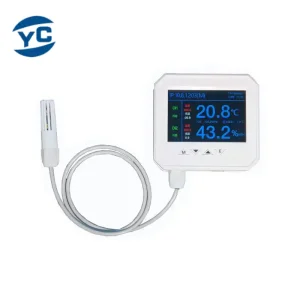
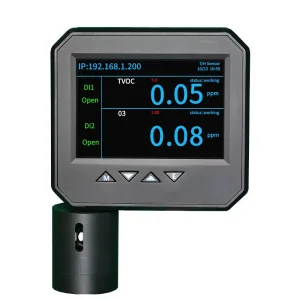
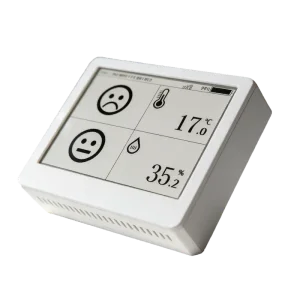
Explore our premium range of Ethernet, PoE, and wireless multi-gas combination acquisition systems designed for strict laboratory, computing center, and industrial process monitoring environments.
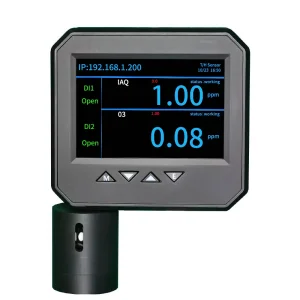 CE Certification APEM-5930G Ethernet Indoor Air Quality & Ozone with Temperature & Humidity Data Logger Manufacturer
View Details
CE Certification APEM-5930G Ethernet Indoor Air Quality & Ozone with Temperature & Humidity Data Logger Manufacturer
View Details
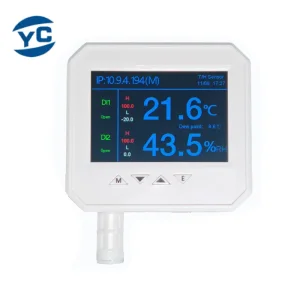 China APEM-5930 Power over Ethernet Temperature and Humidity Sensor - Customizable Factory Solutions
View Details
China APEM-5930 Power over Ethernet Temperature and Humidity Sensor - Customizable Factory Solutions
View Details
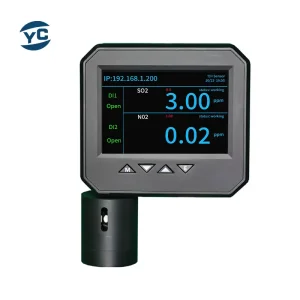 China APEM-5930G Sensor for Temperature, Humidity, SO₂ & NO₂ - Reliable China Suppliers & Factory Solutions
View Details
China APEM-5930G Sensor for Temperature, Humidity, SO₂ & NO₂ - Reliable China Suppliers & Factory Solutions
View Details
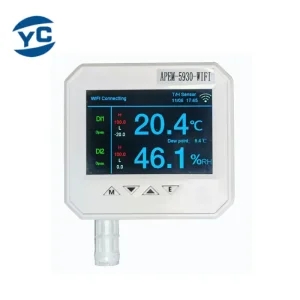 OEM APEM-5930W Ethernet Temperature Humidity Sensor - WiFi & Wired - China Suppliers & Factory
View Details
OEM China APEM-5930G Ethernet Sensor for Temperature, Humidity, SO₂ & NO₂ Monitoring - Factory Supplier
View Details
OEM APEM-5930W Ethernet Temperature Humidity Sensor - WiFi & Wired - China Suppliers & Factory
View Details
OEM China APEM-5930G Ethernet Sensor for Temperature, Humidity, SO₂ & NO₂ Monitoring - Factory Supplier
View Details
Beijing Yingchuanglihe Electronic Technology Co., Ltd. is a high-tech pioneer specializing in environmental monitoring sensor technologies. Established in 2007 in Beijing, China, we operate a cutting-edge 1,500+ square meter manufacturing facility staffed by more than 100 skilled engineers and quality control specialists. For nearly two decades, we have designed, manufactured, and deployed state-of-the-art telemetry equipment for critical infrastructures, ranging from high-speed railway networks to cloud data centers run by tech giants like Baidu and Huawei.
By integrating top-tier sensing elements imported directly from Switzerland (Sensirion) and Germany (Bosch), we ensure that our data logger terminals, Ethernet switches, and wireless gateways deliver industry-leading accuracy, exceptional signal-to-noise ratios, and decade-long operating reliability.
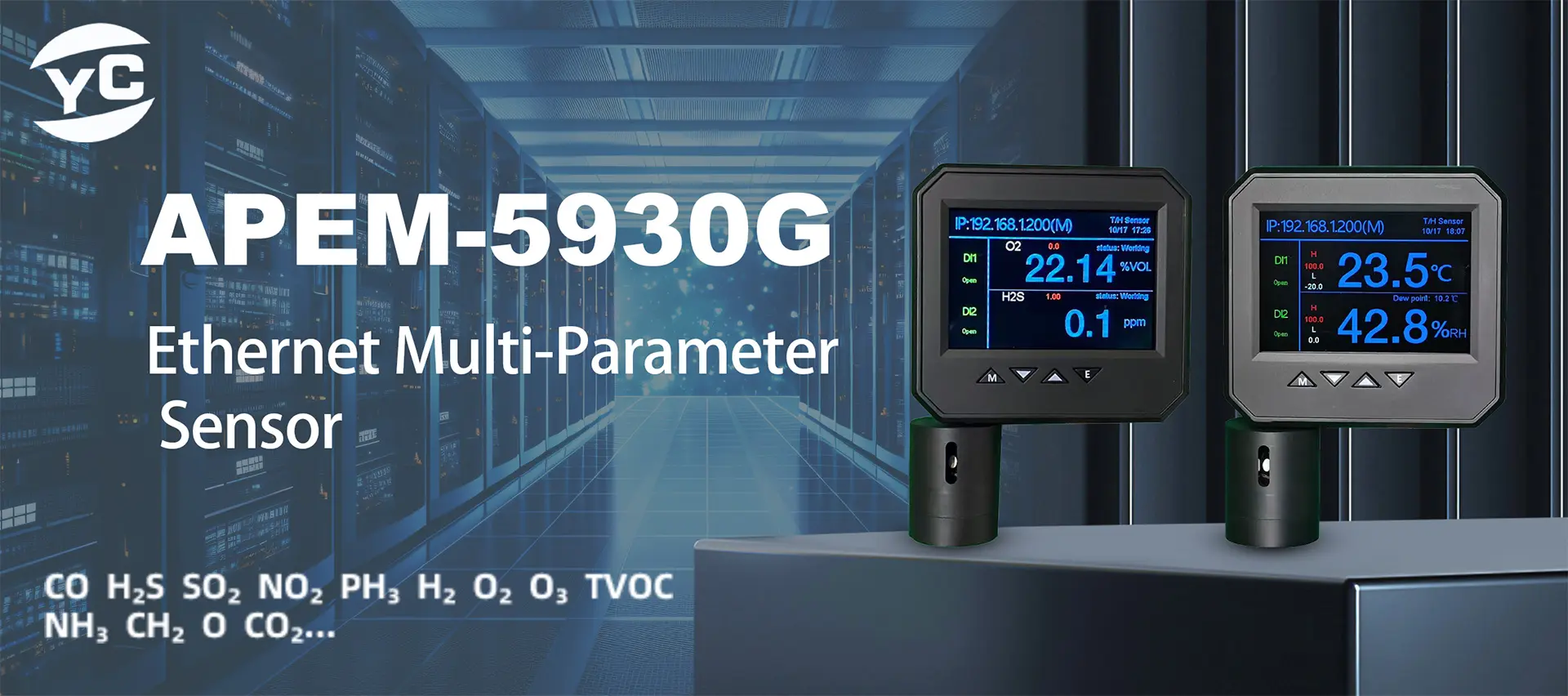
Our terminals are designed to simplify field deployment while maintaining strict, scientific measurement integrity across complex telemetry landscapes.
Equipped with original sensor chips imported from Switzerland and Germany, guaranteeing high sensitivity, low cross-sensitivity, and minimal baseline drift under fluctuating thermal loads.
Native support for industry-standard network protocols: Modbus TCP/RTU, SNMP (V1/V2c/V3), MQTT, JSON over TCP, HTTP RESTful APIs, and LoRaWAN. Perfect for SCADA, ERP, and IoT systems.
We provide deep hardware modifications including customizable sensor probes, enclosure revisions (IP65/IP67/IP68), brand labeling, customized firmware protocols, and tailored telemetry configurations.
A deep look into the hardware layout, sensing technologies, and communication frameworks of our industrial gas acquisition terminals.
The modern industrial landscape demands highly stable and modular data acquisition interfaces. A single-point transmitter is no longer sufficient for complex processing zones, cleanrooms, and municipal assets. The Yingchuanglihe Multi-Gas Combination Data Acquisition Terminal series acts as a unified localized hub, processing environmental indices like Temperature, Relative Humidity, Dew Point, and Atmospheric Pressure alongside toxic, combustible, or volatile gases.
By selecting target-specific electrochemical, optical (NDIR), and metal-oxide semiconductor (MOS) sensor elements, we achieve exceptional accuracy ratings. For example:
Reliable operations depend heavily on robust power distribution and clean network pathways. Our terminal designs include:
From modern high-density data centers to municipal water infrastructure networks, our multi-gas terminals are designed to meet diverse operational needs worldwide.
Deployed in Tier III and Tier IV computing centers (including Baidu's Yangquan Data Center) to monitor temperature, humidity, and corrosive atmospheric pollutants. Real-time logging prevents copper creep and silver corrosion on high-density blade servers, keeping uptime metrics above 99.999%.
Developed alongside major environmental utilities (such as Beijing Enterprises Water Group). Terminals housed in IP-rated street-level cabinets continuously measure Oxygen levels, Hydrogen Sulfide (H₂S) gas concentrations, and pipeline pressure, protecting maintenance crews and preventing structural pipe corrosion.
Installed inside municipal autonomous driving test cabinets and edge-computing boxes across Beijing. These terminals stabilize delicate diagnostic computers by monitoring local temperature spikes, humidity fluctuations, and ambient air pollutants, protecting critical roadside units (RSUs).
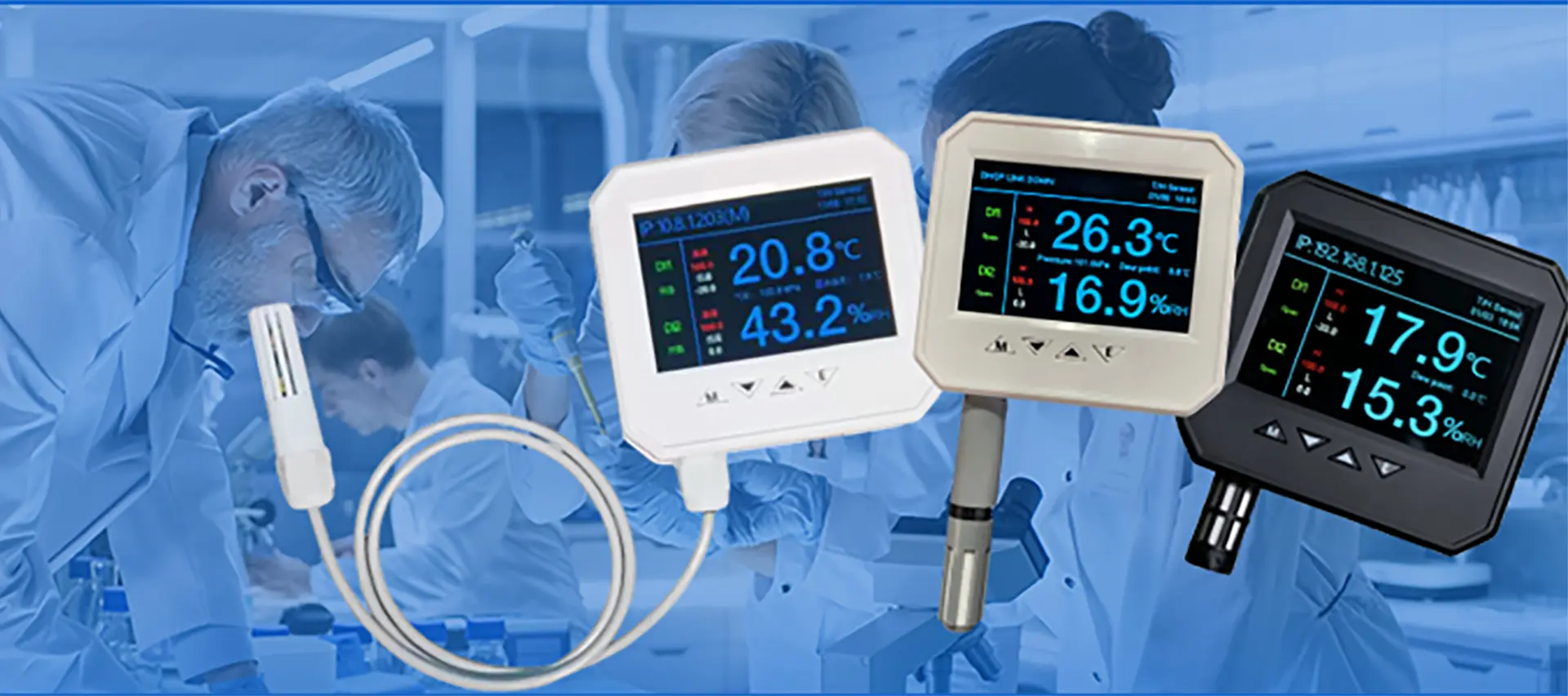
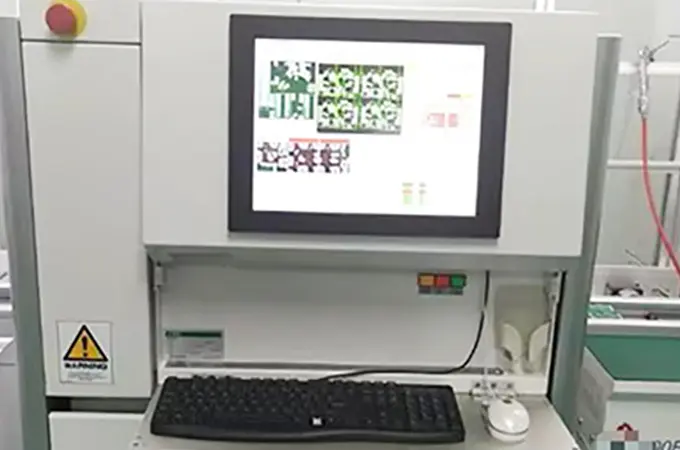
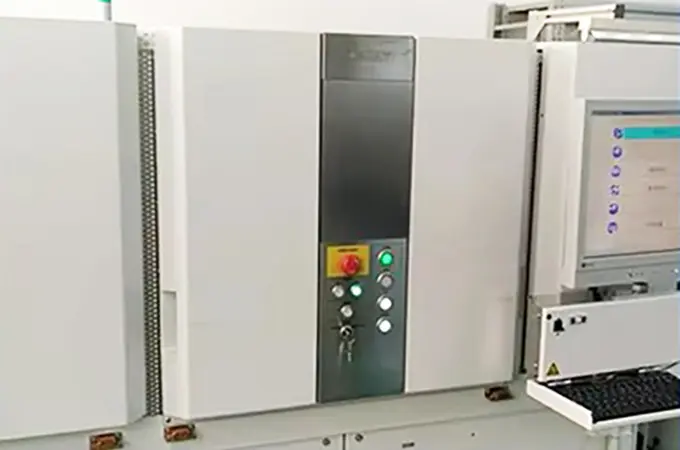
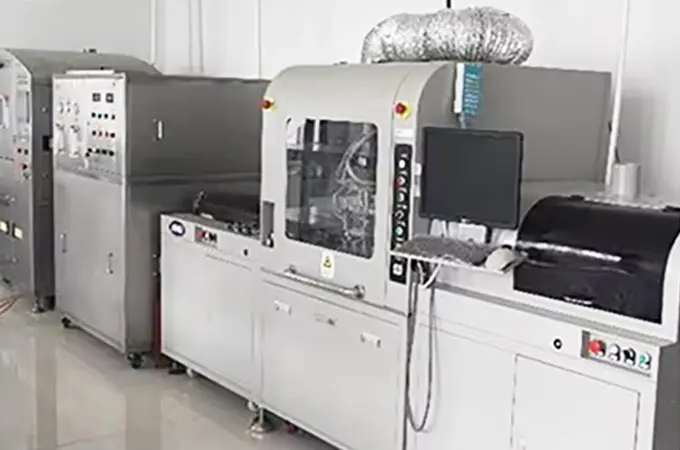
Yingchuanglihe's Beijing-based manufacturing facility offers global clients unmatched supply chain stability and speed-to-market advantages. Operating in the heart of China's high-tech industrial corridor, we enjoy immediate access to premium raw electronic components, advanced optical instrumentation, and skilled engineering talent.
Our factory runs 5 automated production lines capable of producing tens of thousands of sensor assemblies monthly. Through direct supply lines and partnerships with global logic IC, power module, and precision calibration gas suppliers, we protect our clients from global component shortages and ensure predictable 2-to-4 week turnaround times for volume wholesale orders.
Every batch of terminals undergoes a multi-stage Quality Assurance (QA) routine: initial component testing, multi-point environmental chamber calibration, automated network load testing (Modbus TCP/SNMP loops), and final stress testing. This rigorous approach keeps return-merchandise-authorization (RMA) rates below 0.15%.
A history of technological achievements, co-branded solutions, and infrastructural engineering milestones.
Company founded in Beijing; successfully launched the first intelligent TCP/IP-based environmental monitoring terminal alongside initial management software.
Partnered with Mocha Software to introduce the TH-5939 series of network-environmental monitors featuring full SNMP protocol support.
Collaborated with Switzerland's COMLAB to develop the TH-5869 protective rugged Ethernet environmental sensor series, deployed across major high-speed rail networks (Beijing-Kowloon, Wuhan-Guangzhou lines).
Joined forces with Founder Technology to launch the APEM-6100 series, pioneering Power over Ethernet (PoE) technology in the industrial sensor market.
Partnered with Foxconn to customize environmental telemetry hardware, helping establish factory monitoring standards for manufacturing workshops.
Collaborated with Baidu to launch the next-generation APEM-5900 Ethernet smart monitoring terminal, installed across Baidu's Yangquan Data Center.
Released an integrated smart solutions suite, expanding telemetry technologies beyond data centers into complex industrial settings.
Introduced our integrated outdoor cabinet monitoring system, deployed in Huawei and China Merchants Huaruan ETC expressway road projects.
Contributed to Beijing's autonomous driving initiative, designing and manufacturing edge-computing test enclosures and roadside sensor junctions.
Delivered telemetry hardware to multiple large-scale AI computing centers, providing ambient environmental tracking for GPU infrastructures.
Formed divisions with Beijing Enterprises Water Group and Beijing University of Civil Engineering and Architecture. Achieved milestones in smart pipelines, Beidou deformation monitoring, and acquired formal IDC business qualifications.
Yingchuanglihe regularly presents our telemetry technologies at international industrial automation exhibitions and utility trade shows.
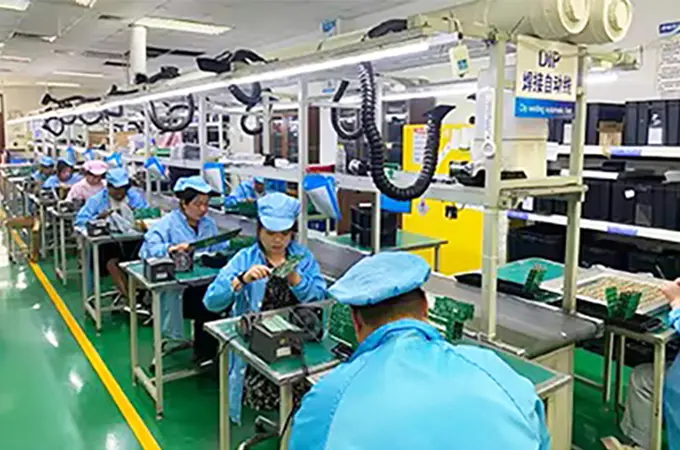
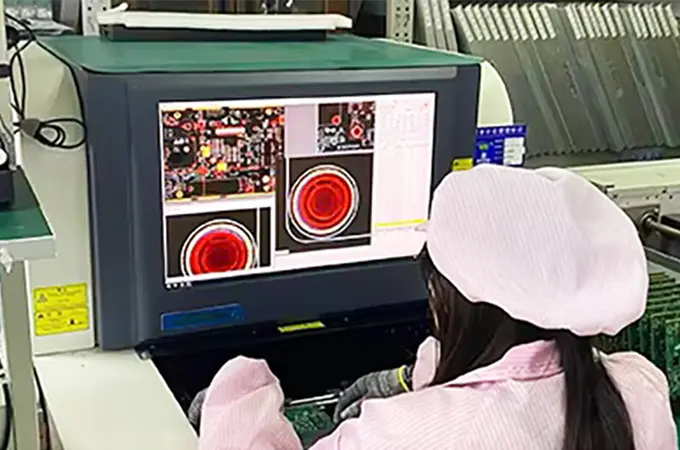
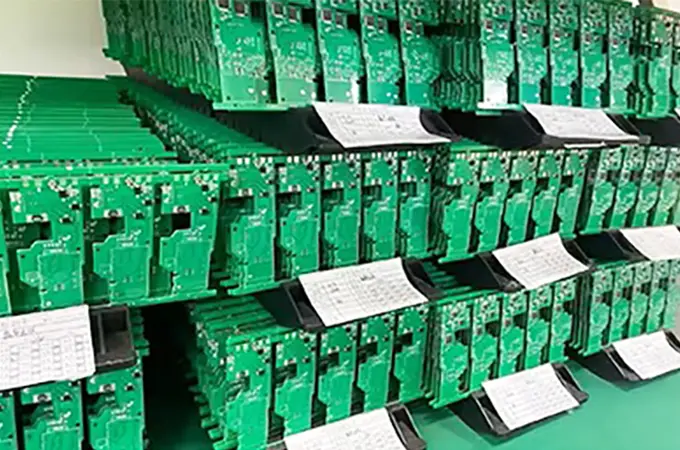
We continuously invest in research and development to align our hardware platform with the evolving industrial IoT landscape.
By 2025, our telemetry terminals will feature onboard edge ML algorithms that track drift characteristics. These engines will automatically adjust baseline outputs in real time, extending calibration cycles from 12 months to 36 months.
Our engineering team is refining sub-miniature Photoacoustic Spectroscopy (PAS) gas sensor cores. This design will allow real-time multigas profiling (CO₂, CO, TVOC, and CH₄) within a single sensor housing.
To support remote pipelines and structural monitoring, our next-generation modules will integrate 5G RedCap and high-precision Beidou positioning, enabling real-time telemetry updates over long distances.
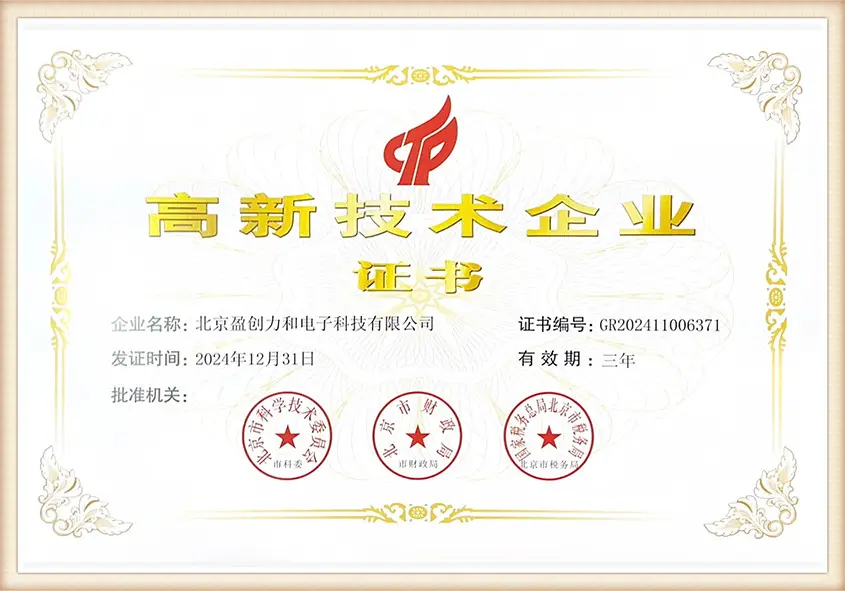
Yingchuanglihe is committed to meeting global regulatory and quality standards. Our environmental terminals hold comprehensive CE, FCC, RoHS, and UKCA certifications, ensuring smooth compliance approvals for projects worldwide.
Additionally, our factory operations conform strictly to ISO 9001 quality management guidelines. From material receiving inspections to final shipping audits, every step is carefully documented for traceable quality control.
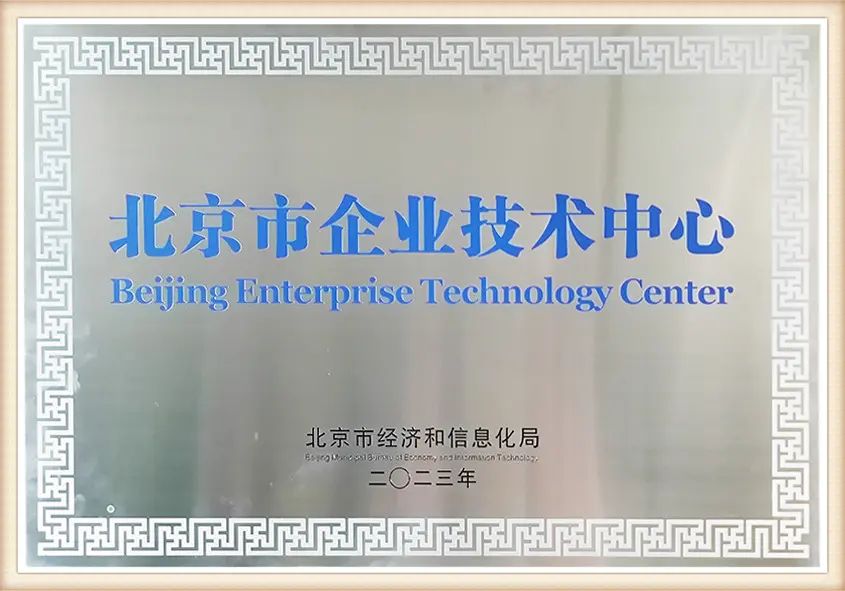
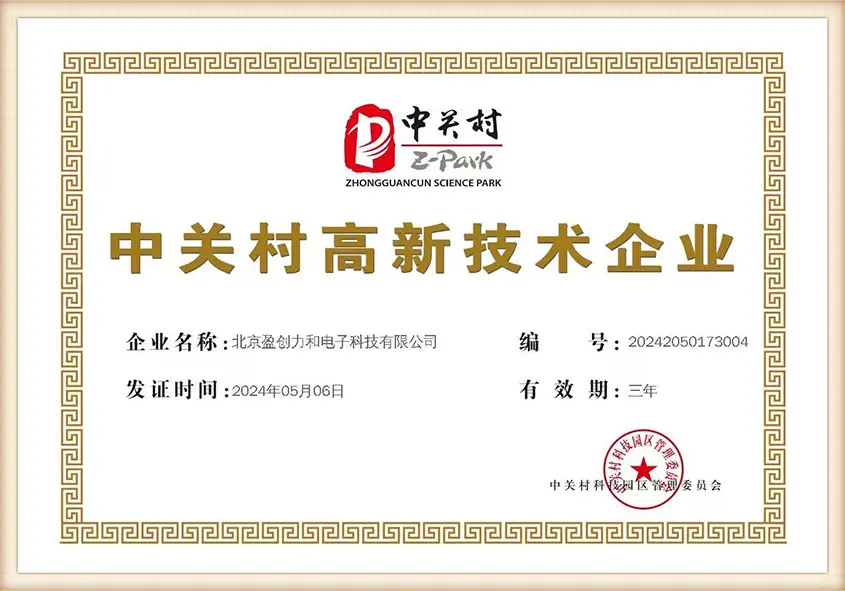
Choose from our specialized electrochemical, metal-oxide, and physical-parameter sensor models designed to meet your specific target configurations.
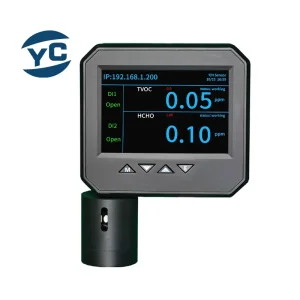 OEM APEM-5930G: China Suppliers' Factory Ethernet TVOC & HCHO Logger with Temperature & Humidity Monitoring
View Details
Custom China APEM-5930G TVOC & HCHO Ethernet Data Logger, Humidity & Temperature Sensor - Supplier
View Details
OEM APEM-5930G: China Suppliers' Factory Ethernet TVOC & HCHO Logger with Temperature & Humidity Monitoring
View Details
Custom China APEM-5930G TVOC & HCHO Ethernet Data Logger, Humidity & Temperature Sensor - Supplier
View Details
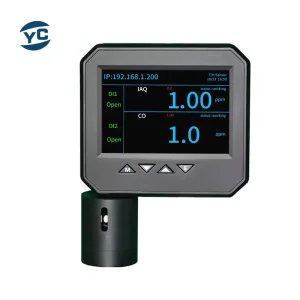 CE Certification APEM-5930G Ethernet IAQ & CO Logger - Temperature, Humidity Sensor - China Factory
View Details
Custom APEM-5930G Ethernet IAQ & CO Data Logger | China Supplier for Temperature & Humidity
View Details
CE Certification APEM-5930G Ethernet IAQ & CO Logger - Temperature, Humidity Sensor - China Factory
View Details
Custom APEM-5930G Ethernet IAQ & CO Data Logger | China Supplier for Temperature & Humidity
View Details
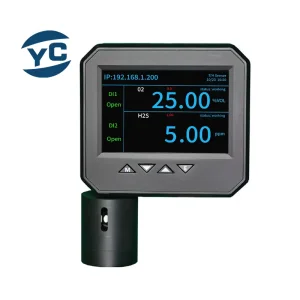 Wholesale China APEM-5930G Ethernet Data Logger - Oxygen, Hydrogen Sulfide, Temperature & Humidity Sensor
View Details
Custom APEM-5930W Ethernet Temperature Humidity Sensor - Reliable China Suppliers for Smart Monitoring
View Details
Wholesale China APEM-5930G Ethernet Data Logger - Oxygen, Hydrogen Sulfide, Temperature & Humidity Sensor
View Details
Custom APEM-5930W Ethernet Temperature Humidity Sensor - Reliable China Suppliers for Smart Monitoring
View Details
A quick reference table detailing our core terminal architectures, communication protocols, and monitoring capabilities.
| Model Series | Physical Parameters | Standard Supported Gases | Primary Protocols | Power Interface |
|---|---|---|---|---|
| APEM-5930 | Temperature, Humidity, Dew Point | None (T/H Only) | Modbus TCP, SNMP, JSON | PoE (802.3af) / DC 12-48V |
| APEM-5930P | T/H, Dew Point, Barometric Pressure | None | Modbus TCP, SNMP, MQTT | PoE (802.3af) / DC 12-48V |
| APEM-5930G-IAQ-CO | Temperature, Humidity, Dew Point | Carbon Monoxide (CO), General IAQ | Modbus TCP, SNMP, MQTT | PoE (802.3af) / DC 12-48V |
| APEM-5930G-SO₂-NO₂ | Temperature, Humidity, Dew Point | Sulfur Dioxide, Nitrogen Dioxide | Modbus TCP, SNMP, HTTP | PoE (802.3af) / DC 12-48V |
| APEM-5930G-TVOC-O₃ | Temperature, Humidity, Dew Point | TVOC, Ozone (O₃) | Modbus TCP, SNMP, MQTT | PoE / DC 12-48V |
| APEM-5930G-O₂-H₂S | Temperature, Humidity, Dew Point | Oxygen (O₂), Hydrogen Sulfide (H₂S) | Modbus TCP, SNMP, RS-485 Passthrough | PoE / DC 12-48V |
Find answers to common questions about calibration, deployment, integration, and ordering procedures for our multi-gas data acquisition terminals.
 YCLH Sensor