High-precision wireless & wired sensors for data centers, smart agriculture, cold chains, and industrial automation environments.
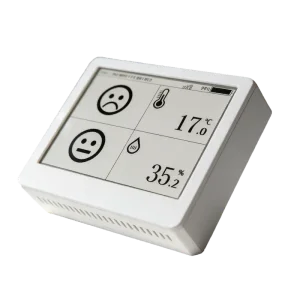
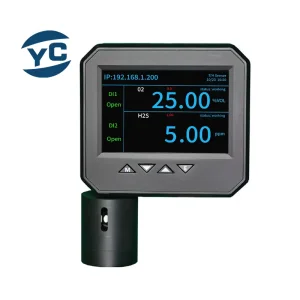
Modern industrial, pharmaceutical, and enterprise ecosystems demand precise environmental controls. Micro-climate instabilities cost global enterprises billions annually in spoiled chemical reagents, unstable computing hardware, and degraded crop yields. The rapid adoption of Wi-Fi-enabled temperature and humidity telemetry represents a logical leap forward from traditional analog instrumentation to connected smart systems.
Industrial IoT (IIoT) requires wireless technologies that merge seamlessly with existing enterprise IT backbones. While proprietary RF architectures demand expensive gateway hardware, commercial dual-mode Wi-Fi and Power-over-Ethernet (PoE) sensors deploy directly onto standard enterprise wireless access points (APs) and switches. This native network compatibility eliminates complex intermediate hardware, dramatically lowering the Total Cost of Ownership (TCO) and boosting scaling potential.
Standard retail smart-home Wi-Fi environmental monitors are not built for demanding commercial operations. In industrial applications, sensor nodes face continuous electromagnetic interference (EMI) from heavy machinery, high thermal shifts, exposure to chemical cleansers, and signal attenuation from concrete and steel structures. To perform reliably in these conditions, hardware must feature:
Precision engineering and premium environmental hardware production since 2007.
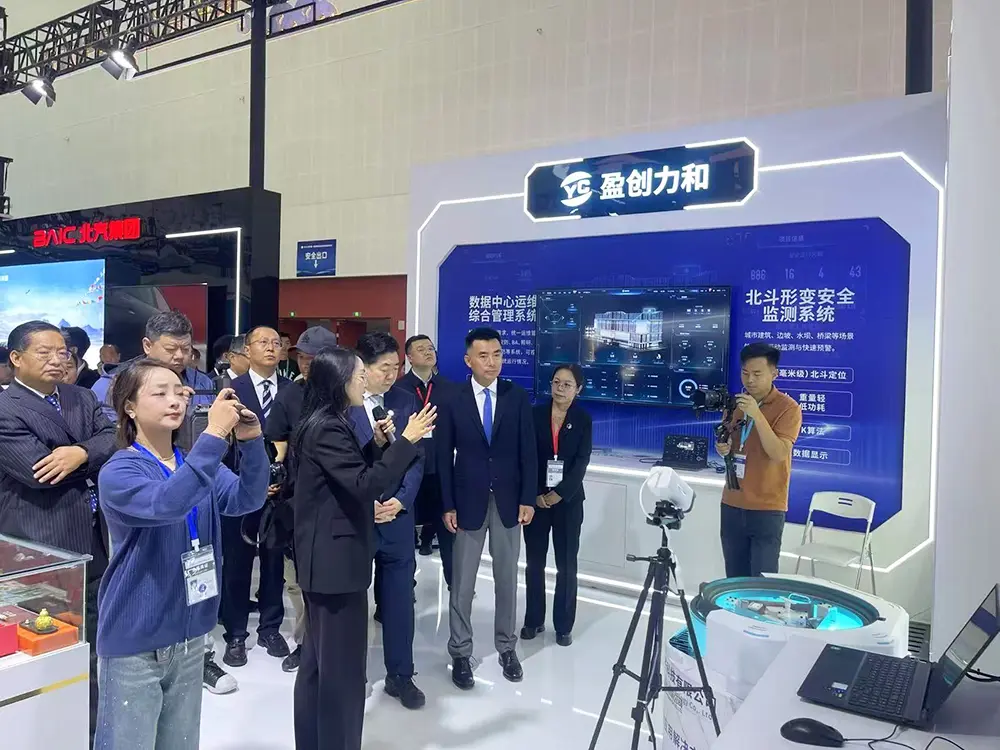
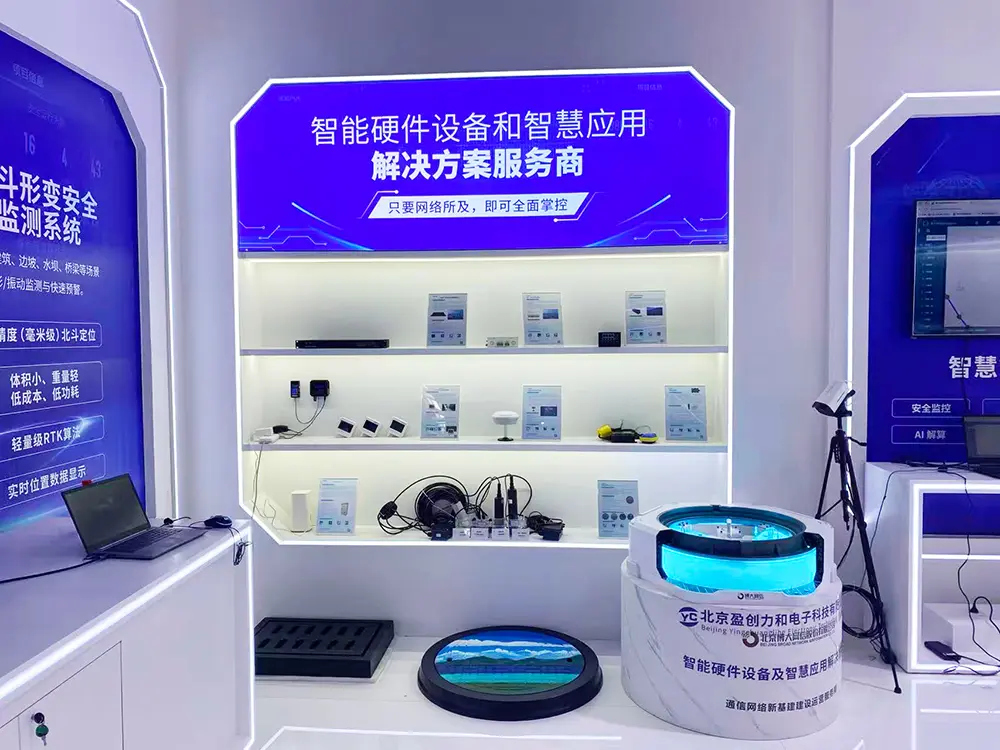
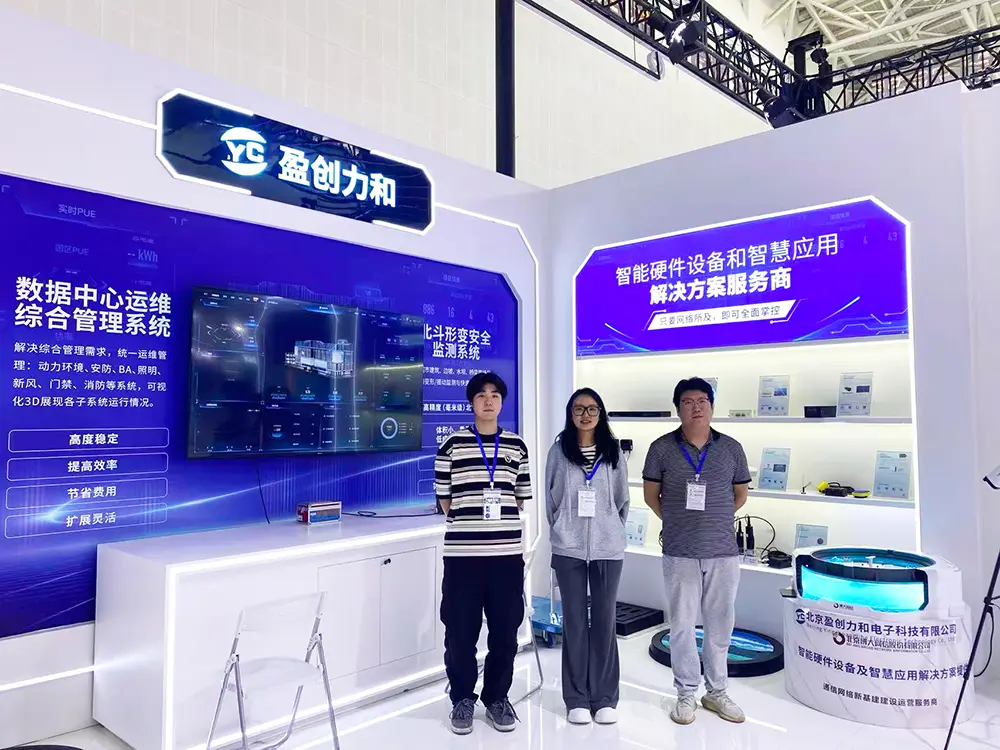
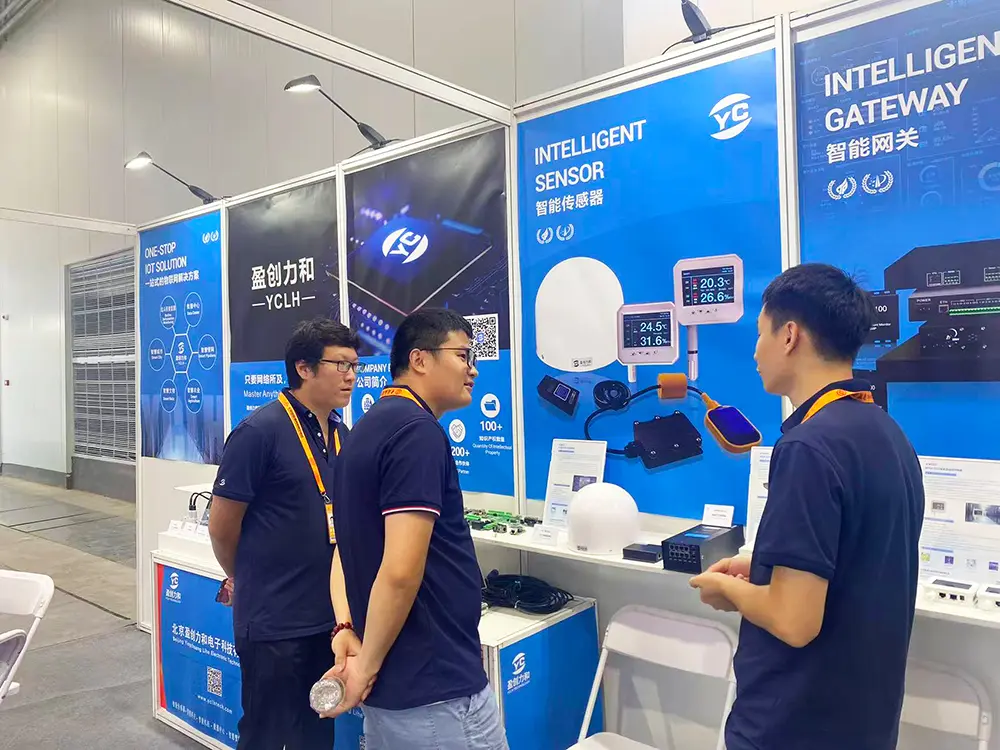
Established in Beijing, Yingchuanglihe (YCLI) is a premier developer of high-performance micro-climate sensors. We specialize in designing and manufacturing versatile multi-parameter sensor arrays, providing advanced telemetry that supports critical systems across data centers, high-speed rail lines, automated logistics, and smart water networks worldwide.
By using Swiss and German sensor components, YCLI delivers long-term stability and outstanding measurement accuracy. Our complete OEM/ODM production processes are fully certified under CE, FCC, and RoHS standards, ensuring seamless global market compatibility.
Industrial wireless sensors live and die by the quality of their physical transducers and internal analog-to-digital converters (ADCs). Our custom APEM-series sensor lines use imported polymer capacitive humidity sensors and band-gap temperature sensors, calibrated inside automated environmental chambers.
For chemical stability and accuracy, our standard designs incorporate state-of-the-art Sensirion SHT-series and Bosch BME-series micro-chipsets. These silicon-die components feature integrated, fully calibrated digital outputs, which eliminate analog signal loss across internal circuitry and deliver repeatable data points even in high-humidity conditions near saturation limits.
| Performance Metric | Industrial-Grade Specs (APEM-Series) | Typical Commercial Standard |
|---|---|---|
| Temperature Operating Limits | -40°C to +85°C (Extended probe arrays to +125°C) | -10°C to +50°C |
| Temperature Nominal Accuracy | ±0.1°C to ±0.3°C (Laser-calibrated Swiss silicon) | ±1.0°C to ±2.0°C |
| Relative Humidity (RH) Limits | 0% to 100% Non-Condensing (IP67 protective membrane) | 20% to 80% Non-Condensing |
| Relative Humidity Accuracy | ±1.5% to ±2.0% RH (Across full 10-90% scale) | ±5.0% RH |
| Annual Drift Coefficient | < 0.03°C / year (Temp); < 0.25% RH / year (Humidity) | > 0.5°C / year (Temp); > 1.0% RH / year (Humidity) |
| Supported Network Protocols | Modbus TCP, TCP/IP, SNMP v1/v2/v3, MQTT over TLS | Proprietary cloud API only |
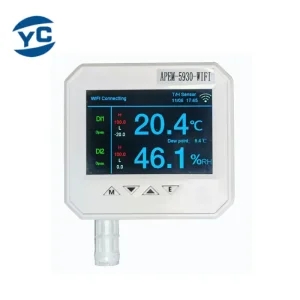
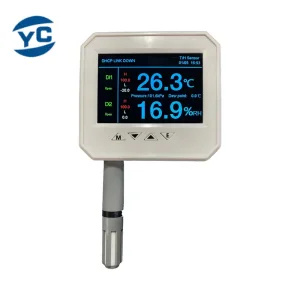
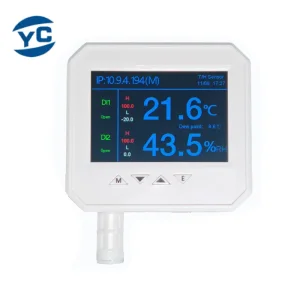
Our flagship APEM-5930W environmental sensor is engineered with dual-mode network capability. This configuration uses a wired Ethernet connection as its main path and transitions to high-bandwidth wireless Wi-Fi (2.4 GHz 802.11b/g/n) in the event of physical line disruptions. This physical-layer redundancy ensures continuous data transmission for critical infrastructure projects.
In addition, our hardware interfaces natively with SCADA, DCS, and modern enterprise database setups. The onboard firmware provides Modbus TCP registers, MQTT JSON clients for IoT gateways, and SNMP traps to notify Network Operation Centers (NOCs) the instant an environmental metric exceeds customized safe limits.
Tracing our development of environmental telemetry systems from 2007 through today.
Company founded. Developed early TCP/IP-based environmental monitoring hardware and launched our first-generation central telemetry tracking software.
Partnered with Mocha Software to co-develop and launch the TH-5939 series of network-monitoring products, natively supporting SNMP integration.
Collaborated with Switzerland's COMLAB to produce the ruggedized TH-5869 protective ethernet environmental sensors. Implemented across high-speed rail lines, including the Beijing-Kowloon, Beijing-Shanghai, and Wuhan-Guangzhou express routes.
Partnered with Founder Technology to launch the APEM-6100, establishing ourselves as one of the first domestic manufacturers to integrate Power-over-Ethernet (PoE) in industrial climate sensors.
Partnered with Foxconn to standardize automated production workshop environmental sensors, setting the benchmark for electronics manufacturing monitoring.
Collaborated with Baidu to supply our next-generation APEM-5900 intelligent network monitoring nodes, deployed inside Baidu's Yangquan Data Center.
Launched a series of integrated outdoor cabinet telemetry systems, successfully deployed across Huawei and China Merchants Huaruan ETC expressway networks.
Contributed to Beijing's high-level autonomous driving initiatives by designing edge-computing gateway boxes and ultra-stable roadside sensor equipment.
Formed joint business divisions with Beijing Enterprises Water Group and co-founded the Beidou High-Precision Deformation Monitoring business division with the Beijing University of Civil Engineering and Architecture.
Industrial applications require customized designs tailored to their unique environments. Off-the-shelf devices often struggle to meet the specific demands of highly specialized fields.
Modern computing facilities operate under narrow thermal limits to optimize Power Usage Effectiveness (PUE) and prevent hardware issues. Deployed at the rack inlet level, our custom Wi-Fi and PoE sensors track thermal profiles in real-time. Native support for SNMP v3 and Modbus TCP lets facilities integrate our sensors directly into DCIM (Data Center Infrastructure Management) platforms like StruxureWare or Sunbird, protecting critical processing units from localized cooling drops.
Pharmaceutical storage and distribution are strictly regulated by GMP and FDA Title 21 CFR Part 11 requirements. Temperature drops or humidity shifts can render sensitive biological products or vaccines completely ineffective. Our Wi-Fi telemetry nodes are ideal for warehouse mapping and deep cold-storage monitoring, featuring automatic data backlogs. If the wireless network goes down, the internal flash memory stores environmental readings and automatically re-uploads them when connectivity is restored, preventing any gaps in compliance records.
Agricultural operations need durable, long-term environmental hardware. Greenhouses expose electronic equipment to high humidity, pesticide sprays, and dynamic lighting. Our sensors utilize customized, hydrophobic sintered filter probes that resist chemical damage and protect the internal silicon elements from moisture. This design delivers reliable, long-term humidity and dew point measurements to maximize yields.
Our manufacturing processes are fully compliant with the highest international standards.
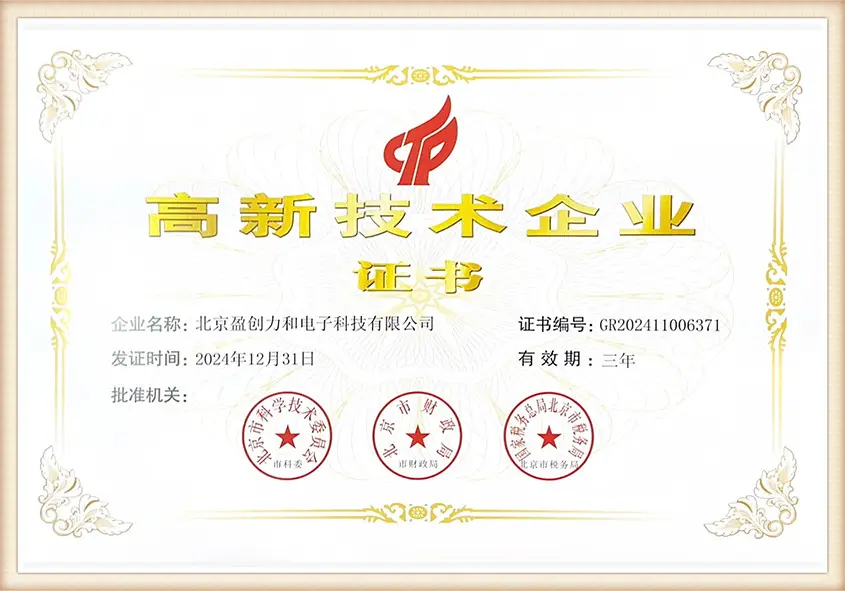
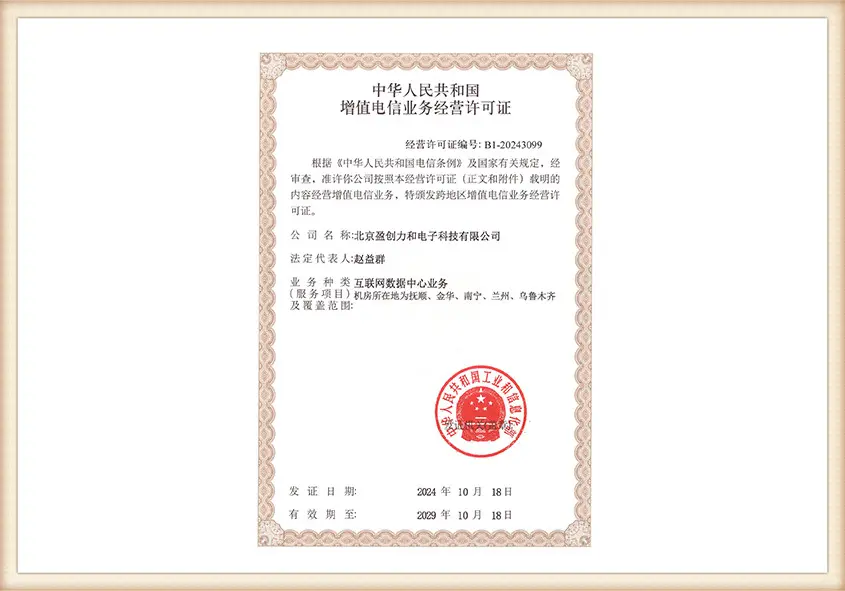
We believe in verifiable quality. Beijing Yingchuanglihe operates under strict international manufacturing and safety protocols. All our products are CE, FCC, and RoHS certified, ensuring easy deployment and reliable performance across European, North American, and Asia-Pacific markets.


The IoT landscape is shifting from simple, passive data logging to intelligent edge processing. Future industrial systems will require sensor nodes to analyze physical metrics directly on the device, rather than relying solely on raw data streams sent to central cloud databases.
Yingchuanglihe is leading this innovation by integrating Edge Computing capabilities directly into our Wi-Fi and ethernet sensor designs. This lets our devices perform anomaly detection, predict system drift, and run micro-filtering algorithms locally. By processing data on the edge, we minimize network load, reduce security vulnerabilities, and ensure real-time environmental alerts even during network disruptions.
Additionally, we are expanding our support for unifying protocols such as Matter and Wi-Fi 6 (802.11ax). These advanced communication protocols bring improved power efficiency and robust device-to-device connectivity. These technologies allow our multi-parameter sensor arrays to integrate smoothly with smart building control systems and next-generation industrial automation tools.
Expert technical insights regarding deployment, calibration, and integration of industrial Wi-Fi sensors.
We recommend calibrating your devices every 12 to 24 months, depending on the environment. Sensors deployed in harsh conditions—such as high chemical concentrations, continuous high humidity, or extreme temperatures—should be checked annually to maintain peak accuracy.
Our advanced models, including the dual-mode APEM-5930W, feature built-in non-volatile storage. If the Wi-Fi or Ethernet signal drops, the sensor stores all readings locally and automatically uploads them to your system once connectivity is restored, ensuring zero data loss.
Yes. Our sensors communicate using standard open protocols like Modbus TCP, SNMP (v1/v2/v3), and MQTT. This ensures simple integration with major SCADA, DCS, DCIM, and general IoT cloud platforms without requiring proprietary software.
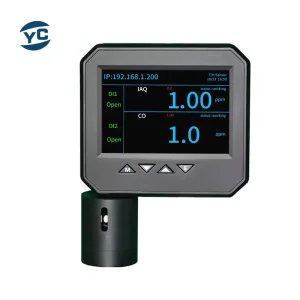
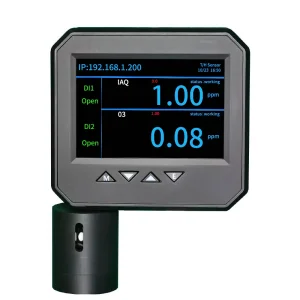
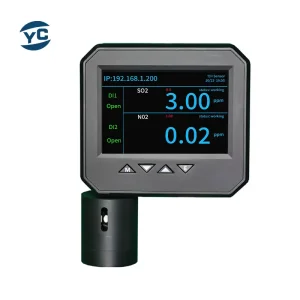
Our multi-parameter sensors (such as the APEM-5930G series) combine temperature and humidity with gas detection (like CO, CO2, O2, H2S, or TVOC). This integrated approach provides comprehensive environmental and air quality tracking within a single, cost-effective device, simplifying installation and maintenance.
Explore our full selection of Power over Ethernet (PoE), Wi-Fi, LoRa, and multi-gas data loggers.
 YCLH Sensor