Industrial Ethernet, PoE, Wifi, and LoRa wireless sensor modules engineered for zero-latency monitoring networks
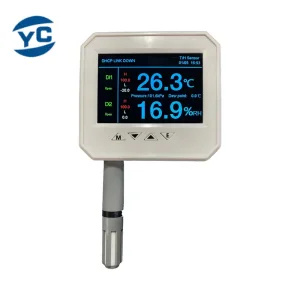
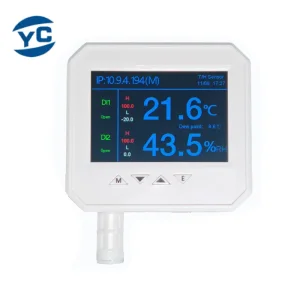
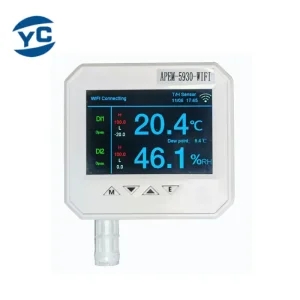
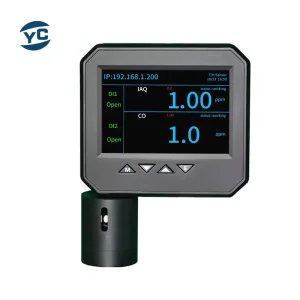
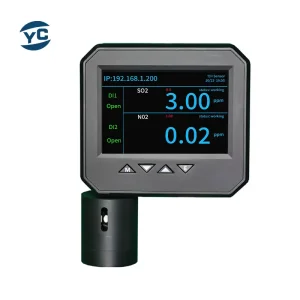
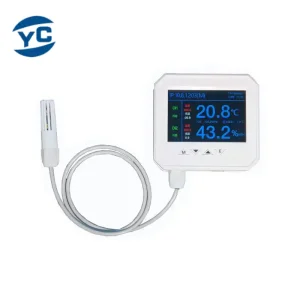
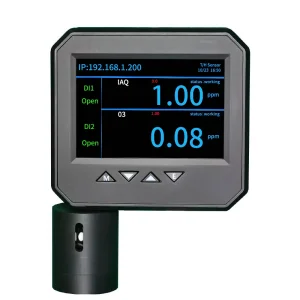
In the age of smart cities, automated manufacturing, and hyperscale data centers, real-time monitoring sensors form the nervous system of modern industrial operations. Environmental variability, even by fractions of a degree or minimal percentage points in relative humidity, can result in catastrophic server failures, ruined biochemical batches, or damaged historical archives. To address this risk, Beijing Yingchuanglihe Electronic Technology Co., Ltd. (YCLISensors) has pioneered advanced sensor systems designed to meet the rigorous demands of global industrial applications.
Established in 2007, Beijing Yingchuanglihe has spent over 18 years refining the telemetry, physical design, and microchip integration of multi-parameter sensors. Operating from a state-of-the-art 1,500 square meter facility in the high-tech industrial heart of Beijing, the company employs over 100 dedicated specialists, integrating R&D, precision calibration, and automated production. By leveraging Swiss-imported and German-engineered sensor chips, YCLISensors guarantees long-term stability and high-accuracy telemetry for variables including temperature, relative humidity, barometric pressure, dew point, carbon monoxide (CO), sulfur dioxide (SO₂), nitrogen dioxide (NO₂), total volatile organic compounds (TVOCs), formaldehyde (HCHO), ozone (O₃), hydrogen sulfide (H₂S), and oxygen (O₂).
YCLISensors builds its competitive advantage on a foundation of elite component sourcing and strict engineering protocols:
For global businesses sourcing real-time monitoring sensors, the advantages of a Chinese manufacturing base extend beyond basic labor cost savings. The true value lies in the concentration of the semiconductor supply chain, rapid prototyping capabilities, and the ability to scale production overnight. Our facility in Beijing serves as a prime example of this industrial ecosystem in action.
With five automated production lines and fully equipped environmental simulation chambers, YCLISensors conducts rigorous stress-testing on every unit. Sensors are subjected to extreme thermal cycles (-40°C to +85°C) and variable humidity profiles to verify structural integrity and electronics resilience before they leave the factory floor. The high concentration of raw components, specialized PCB assembly (PCBA) factories, and structural enclosure molders in our region allows us to transition from a customized schematic diagram to a physical OEM prototype in as little as 14 business days.
Our real-time monitoring sensors are deployed globally across diverse fields, including:




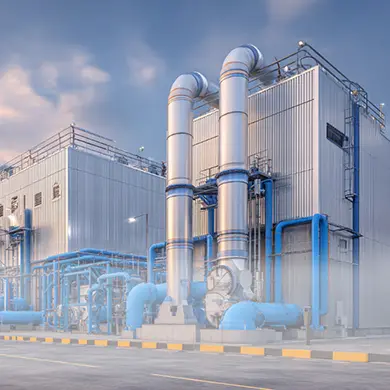
In international trade, importing electronic equipment requires navigating strict regulatory and localized technical standards. To ensure hassle-free customs clearance and standard-compliant installation, all YCLISensors hardware conforms to global certifications. This includes CE Certification for EU markets, FCC Certification for North America, and RoHS Compliance, certifying that our devices are free from lead, mercury, cadmium, and other hazardous substances.
The environmental monitoring sector is shifting away from simple independent displays and moving toward integrated IoT systems. Three major trends are shaping the future of this industry:
A common challenge with overseas sensor installations is the lack of localized technical support. YCLISensors solves this by offering comprehensive English-language configuration manuals, open SDKs for software developers, and responsive firmware updates. Because our hardware communicates via standard protocols like Modbus TCP and SNMP, local integration teams can quickly connect the sensors to regional software tools such as PRTG, Zabbix, or standard SCADA dashboards without needing proprietary mid-ware.
Nearly two decades of innovation, developing TCP/IP sensors, smart Beidou telemetry systems, and advanced environmental loggers
Beijing Yingchuanglihe was founded. The engineering team designed its first intelligent environmental monitoring terminal based on the TCP/IP network protocol, accompanied by the initial build of our proprietary monitoring software.
Partnered with Mocha Software to launch the TH-5939 environmental monitoring series, introducing native SNMP protocol integration to the product line.
Collaborated with Switzerland's COMLAB to develop the TH-5869 protective Ethernet monitoring terminal, deployed across key high-speed rail lines, including the Beijing-Kowloon and Beijing-Shanghai routes.
In partnership with Founder Technology, launched the APEM-6100 Ethernet monitoring terminal—one of the earliest devices in the industry to support Power over Ethernet (PoE) functionality.
Partnered with Foxconn. YCLISensors hardware was adopted as a benchmark standard for real-time workshop environmental monitoring across automated assembly facilities.
Cooperated with Baidu to deploy the next-generation APEM-5900 Ethernet terminals at Baidu's Yangquan Data Center, upgrading the system software to support multi-parameter environmental telemetry.
Introduced a smart multi-scenario monitoring solution, expanding our systems from data centers to industrial parks and complex environmental facilities.
Launched the integrated outdoor cabinet monitoring system, deployed in highway projects with Huawei and China Merchants Huaruan for real-time expressway monitoring.
Pioneered custom integration boxes and edge computing gateways for Beijing's high-level autonomous driving road test corridors, ensuring hardware stability under demanding outdoor conditions.
Participated in building regional intelligent computing center infrastructure, supplying high-performance environmental sensing nodes to keep pace with the growth of AI computing.
Established joint divisions with Beijing Enterprises Water Group and co-founded a Beidou Business Division with the Beijing University of Civil Engineering and Architecture. Achieved key breakthroughs in smart pipeline monitoring, Beidou-driven deformation tracking, and secured Internet Data Center (IDC) business qualifications.
Critical engineering and deployment answers to help guide your system architecture decisions
Explore our advanced range of gas loggers, LoRa transceivers, and multi-gas environmental monitoring gateways
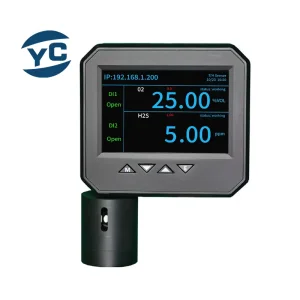
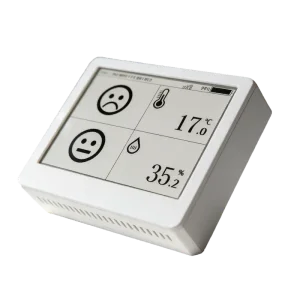
 YCLH Sensor