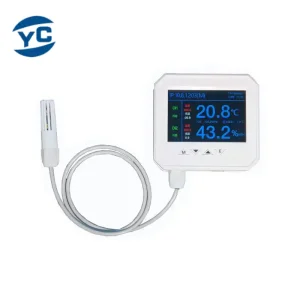
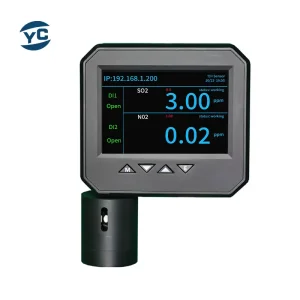
Deploy high-stability monitoring nodes seamlessly integrated with localized factory networks and Korean industrial management standards.
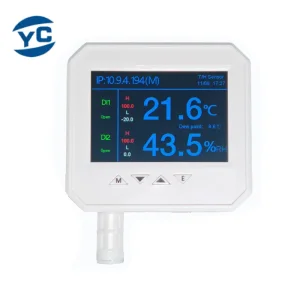
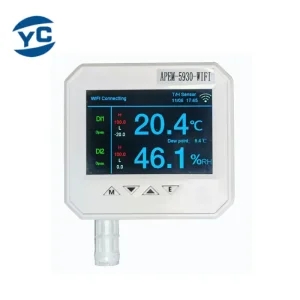
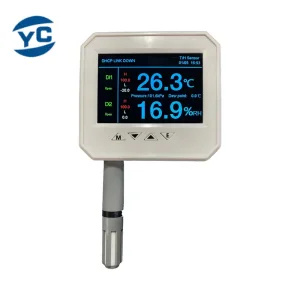
An in-depth look at local commercial demands, global industry dynamics, and China's Factory 4.0 supply chain synergy.
South Korea stands at the global forefront of high-precision manufacturing, led by giants in semiconductors (Samsung Electronics, SK Hynix) and secondary battery cells (LG Energy Solution, Samsung SDI, SK On). Within these facilities, environmental control is not merely a utility—it is a critical determinant of product yield and process safety.
Semiconductor Cleanrooms: In Gyeonggi-do wafer fabs, electrostatic discharge (ESD) caused by sub-optimal relative humidity (<35% RH) can instantly destroy micro-circuits. Conversely, humidity levels >55% RH promote microscopic oxidation. APEM-5930P series sensors with integrated atmospheric pressure checks maintain cleanroom positive-pressure boundary isolation.
Lithium Battery Dry Rooms: Battery manufacturers require extremely dry environments, often requiring monitoring equivalent to dew points of -40°C to -60°C. Deploying high-accuracy sensing elements is vital to safeguard chemical reaction steps.
Traditional legacy wiring (like RS-485 Modbus RTU loops) requires separate conduits for DC power and signal cables, complicating modern facility scaling. Power over Ethernet (PoE) technology standardizes industrial automation networks by combining data transmission and power into a single RJ45 Cat5e/Cat6 run.
Integrating environmental monitoring networks directly into SCADA, DCS, or enterprise MES systems using standard protocols (Modbus TCP, MQTT, SNMP) is a key trend. Facility managers can monitor real-time data and access historical charts instantly, bypassing the need for analog-to-digital intermediate barriers.
Operating as a reliable manufacturer partner in China, Beijing Yingchuanglihe Electronic Technology Co., Ltd. offers a compelling combination of rapid R&D iteration, massive production scale, and competitive pricing for Korean and global distributors.
Premium Component Sourcing: All Yingchuanglihe Ethernet and LoRa sensors feature imported sensing chips from industry-leading manufacturers in Switzerland and Germany. These components ensure high baseline accuracy, minimal annual calibration drift, and rapid response times.
OEM/ODM Flexibility: We customize firmware profiles (e.g., custom JSON over HTTP, SNMP MIB tables, custom Modbus register layouts) and structural enclosures (e.g., custom cable lengths, remote probes, outdoor IP65/IP67 rated setups) to fit specific project needs.
Factory Testing & QC: Our 1,500m² manufacturing facility is equipped with ISO-certified calibration chambers. Every sensor undergoes rigorous multi-point validation across various temperature and humidity bands to ensure compliance with CE, FCC, and RoHS standards before shipping.
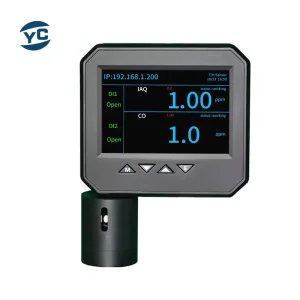
Seoul IoT & Smart Building Projects: Monitoring indoor air quality parameters (Ozone, HCHO, TVOC, CO) in corporate complexes alongside temperature and humidity data logger networks.
Incheon Bio-Pharma Cold Chain: Pharmaceutical cold storage facilities in Incheon depend on continuous temperature records to comply with Korea GMP standards. Our APEM series sensors provide real-time Ethernet alerts to prevent batch damage.
A timeline of our persistent growth, R&D breakthroughs, and successful partnerships with top global enterprises.
We supply a variety of environmental sensing form factors, from basic wired modules to multi-parameter air quality gas hubs.
Advanced sensor nodes designed to monitor hazardous gases, volatile organic compounds, and environmental baselines.
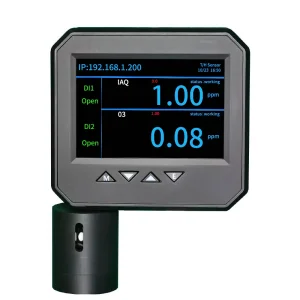
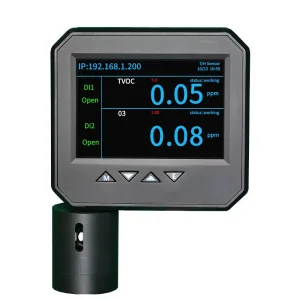
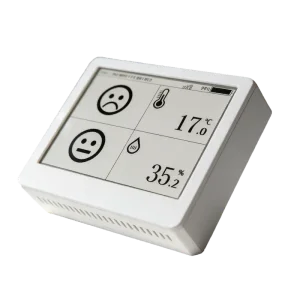
Common questions answered by our engineering and system integration support teams.
Explore our LoRa wireless systems and specialized indoor air quality transmitters.
Get in touch with our applications engineering team to review your technical requirements, request custom quotes, or arrange sample sensor evaluations.
Send Inquiry Now YCLH Sensor