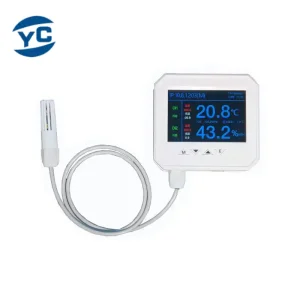
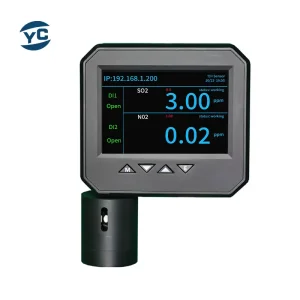
Precision calibration, robust Swiss-engineered microchips, and extensive communication protocols for reliable outdoor & indoor monitoring.
An in-depth look at how the B2B industrial telemetry and IoT sensor manufacturing sector is evolving to meet modern smart infrastructure demands.
The global industrial ecosystem is witnessing a massive migration towards intelligent, automated, and hyper-localized environmental sensing. Outdoor temperature and humidity sensors are no longer simple thermo-hygrometer instruments; they serve as the fundamental data anchors for large-scale Industrial IoT (IIoT) platforms, municipal smart grids, agricultural logistics, and advanced autonomic infrastructure networks.
Modern algorithmic platforms, AI-driven climate optimization systems, and municipal energy-saving engines depend entirely on the reliability of the baseline telemetry feed. If the sensor drifts, fails under sub-zero conditions, or fails due to condensing moisture, the logic of the entire systems breaks down. This has driven the industry toward custom-engineered, robust housing systems, and multi-protocol edge devices.
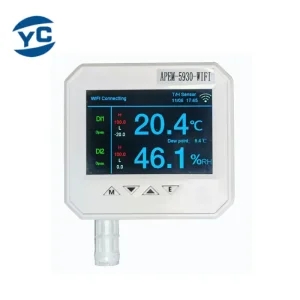
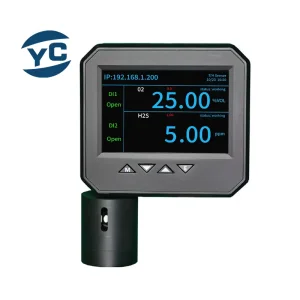
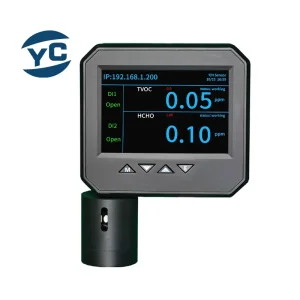
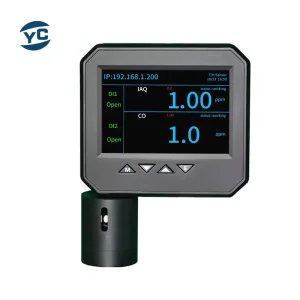
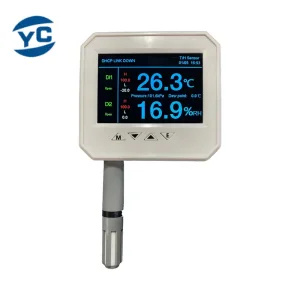
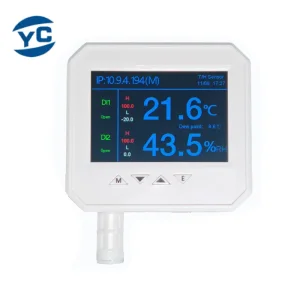
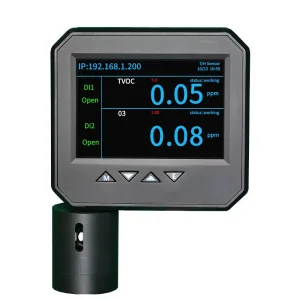
Historically, outdoor sensors monitored a single parameter (typically temperature or humidity). Today's standard requirement focuses heavily on all-in-one localized telemetry. Sensors like the APEM-5930 series integrate temperature, relative humidity, dew point, atmospheric pressure, and specific gases (such as H₂S, TVOC, O₃, CO, or NO₂) into a single physical housing. This consolidation significantly lowers the installation overhead, reduces wire counts, and minimizes power consumption at the remote nodes.
With networks increasingly prone to localized interference and system downtime, dual-mode communication systems (incorporating wired Ethernet/PoE alongside wireless fallback systems like WiFi, LoRaWAN, or NB-IoT) are becoming essential. By computing dew point metrics at the sensor hardware level rather than requesting server calculation cycles, latency is minimized, allowing faster automated safety responses in applications such as data centers or road safety networks.
B2B procurers are increasingly prioritizing total cost of ownership (TCO) over low initial purchase costs. Outdoor installations require minimal manual maintenance and long-term recalibration intervals. By integrating high-precision sensor chips imported directly from industry-leading manufacturers in Switzerland and Germany, modern sensors achieve standard deviations under ±0.3°C and ±2% RH, remaining stable for several years even in corrosive, humid environments.
A breakdown of the crucial parameters B2B buyers must evaluate to ensure system capability, long-term stability, and seamless protocol integration.
High-grade outdoor deployments demand IP65/IP66 rated waterproof housings, specialized hydrophobic membranes to protect the sensing element, and anti-corrosive plastics capable of resisting direct UV exposure without degrading or cracking.
Seamless integration with SCADA, BMS, and Industrial PLC environments requires multi-protocol support. The sensor node must natively communicate via Modbus RTU/TCP, SNMP (V1/V2c/V3), MQTT for cloud pipelines, or standard HTTP/HTTPS API calls.
Compliance is critical for global supply chains. B2B systems require strict CE, FCC, and RoHS certifications to clear regional regulatory standards and satisfy municipal safety inspections in Europe, North America, and beyond.
Beijing Yingchuanglihe Electronic Technology Co., Ltd. is a leading high-tech manufacturer specializing in environmental monitoring sensors and integrated IoT systems since 2007.
Building high-precision systems through deep cooperation with world-class tech firms, infrastructure networks, and automated vehicle laboratories.
The company was founded and developed an intelligent environmental monitoring terminal based on the TCP/IP network protocol. In the same year, the initial version of environmental monitoring software was developed.
In collaboration with Mocha Software, a leading domestic network management software company, a series of SNMP protocol-supported environmental monitoring products, TH-5939, were launched.
In partnership with Switzerland's COMLAB, the TH-5869 protective Ethernet environmental monitoring device was introduced, successfully applied in high-speed rail projects such as the Beijing-Kowloon Line, Beijing-Shanghai Line, and Wuhan-Guangzhou Line.
Cooperating with Founder Technology, the APEM-6100 Ethernet environmental monitoring device was launched. This product was among the early environmental monitoring devices to adopt Power over Ethernet (PoE) technology.
Collaboration with Taiwan's Foxconn, combined with the influence of clients in the industry, established the company's products as one of the industry standards for environmental monitoring in production workshops.
In partnership with Baidu, the next-generation APEM-5900 Ethernet intelligent environmental monitoring terminal was launched, successfully deployed at Baidu's Yangquan Data Center. The environmental monitoring software was also upgraded that year to support a multi-parameter environmental monitoring system, further expanding its functional range.
A smart solutions system was introduced, adopting and implementing multi-scenario project cases. The monitoring system expanded horizontally, starting with smart data centers. In 2019, an integrated outdoor cabinet monitoring system was launched, successfully applied in projects such as Huawei and China Merchants Huaruan ETC expressway initiatives.
Deep involvement in the research, design, and development of Beijing's high-level autonomous driving road test integrated boxes and edge computing gateways, providing highly reliable road test equipment solutions. In 2023, the company participated in the construction of intelligent computing center projects, providing key technical support in core areas such as the establishment of intelligent computing infrastructure.
The company established joint business divisions with Beijing Enterprises Water Group and co-founded a Beidou business division with Beijing University of Civil Engineering and Architecture. Technological breakthroughs were achieved in the fields of smart pipeline network monitoring and Beidou high-precision deformation monitoring. Additionally, the company obtained Internet Data Center (IDC) business qualifications in the same year.
How Yingchuanglihe integrates multi-parameter hardware arrays with customized firmware to solve complex industry challenges across diverse environments.
Our sensors prevent hardware downtime caused by condensation, overheating, or static charge. Standardized PoE connectivity enables seamless direct integration with BMS controllers via SNMP/Modbus TCP protocols.
Outdoor climate monitoring requires robust protective shields. Our remote sensors deliver critical humidity, temperature, and atmospheric pressure metrics to automate irrigation and ventilation controls.
Providing real-time weather metadata to V2X edge terminals. The dual-mode redundant APEM sensors provide continuous, high-speed telemetry under extreme outdoor winter/summer road test conditions.
Strict TVOC, dew point, and relative humidity limits require reliable, long-term monitoring. Yingchuanglihe systems integrate Swiss import chips to deliver calibration stability for pharmaceutical and electronics manufacturing.
Developed in collaboration with Beijing Enterprises Water Group, this system utilizes specialized, low-power LoRa/Ethernet configurations to prevent hazardous gas buildup (H₂S, O₂ monitoring) and detect early-stage pipeline failures.
Continuing to lead the global sensing industry with breakthroughs in telemetry accuracy, satellite integration, and predictive diagnostics.
To maintain our competitive advantage, Yingchuanglihe focuses on developing intelligent environmental telemetry technologies. Our research roadmap is centered on three main areas:
Ensuring seamless integration with regional regulations and providing prompt technical support for B2B supply chains.
We work closely with global distribution networks, regional system integrators, and industrial installers to deliver localized support and ensure regulatory compliance:
Get answers to common technical questions about our custom outdoor environmental sensors, interfaces, and integration capabilities.
Explore our high-performance Ethernet and wireless telemetry solutions designed for challenging industrial and outdoor applications.
 YCLH Sensor