Premium Environmental Intelligence Terminals Powered by High-Precision Swiss & German Chipsets
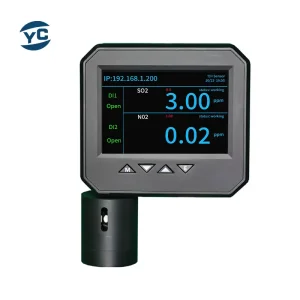
Designed for gaseous environment safety. High-precision monitoring of corrosive trace elements (SO₂ & NO₂) alongside temperature and humidity.
Explore Industrial OEM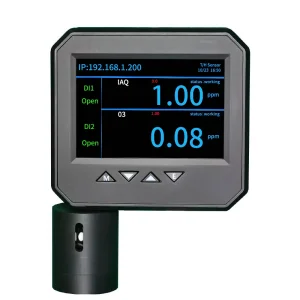
High-performance indoor air quality analyzer monitoring O₃ concentrations, humidity, and temperature. Excellent for critical laboratories and servers.
Wholesale Pricing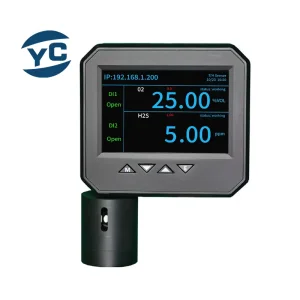
Advanced Ethernet-ready data logger with integrated Oxygen replenishment and toxic Hydrogen Sulfide tracking for smart pipeline safety.
Get Specs Sheet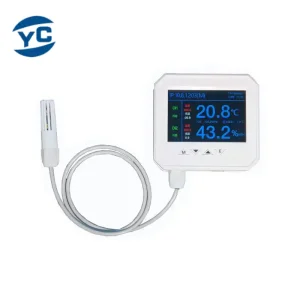
Equipped with customizable optional external probes. Separates signal processing unit from the sensing point for isolated hot-spot management.
Request Customization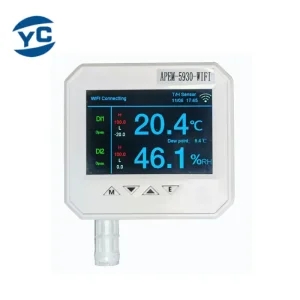
Configured for seamless integration within BACnet/IP and Modbus networks. Promotes sustainable HVAC control in smart office blocks.
Procure OEM Solutions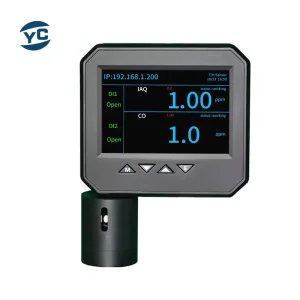
Critical for battery backup chambers. Detects early signs of thermal outgassing through Carbon Monoxide and temperature spike telemetry.
Inquire Factory Direct
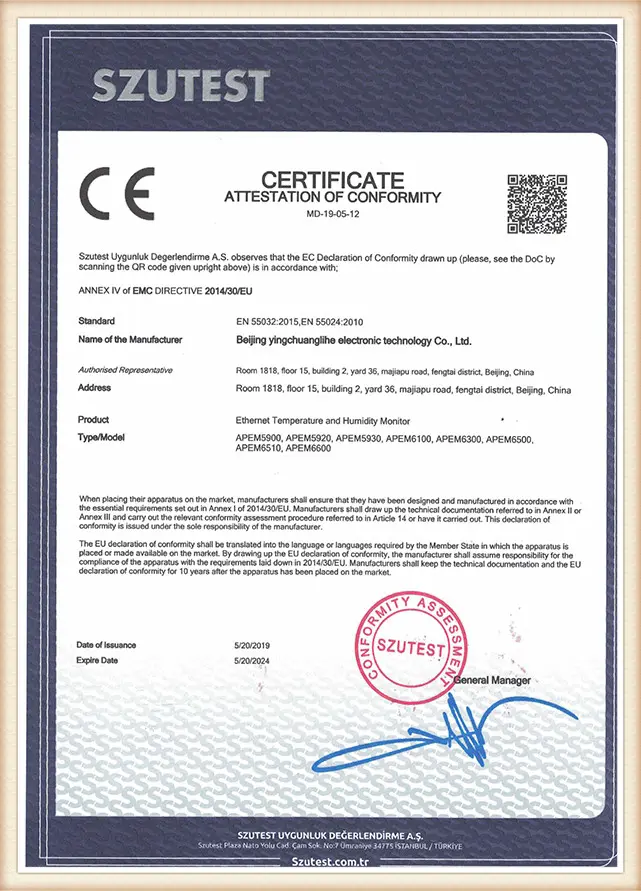
Fully compliant with European CE, EMC, and LVD directives. High reliability under heavy electromagnetic interference environments.
Request Certifications
Redundant network pathways ensuring absolute telemetry uptime. Auto-switches between wired RJ45 and high-frequency Wi-Fi connections.
View Connection MapThe Evolution of Server Room Monitoring: From Reactive Air Control to Predictive Multivariable Telemetry
In the contemporary digital landscape, data centers and high-density server rooms serve as the foundational infrastructure of global computation, artificial intelligence, and clouds. As processing elements reach sub-nanometer levels, the thermal envelope of modern server architectures has compressed dramatically. Unplanned thermal escalations and relative humidity volatility represent the leading catalysts for silicon degradation, electrical shorts, and galvanic corrosion.
Global standards, such as those published by the American Society of Heating, Refrigerating and Air-Conditioning Engineers (ASHRAE TC 9.9), have expanded the allowable temperature limits of data centers to minimize carbon footprints and promote natural air cooling. However, operating within these expanded boundaries exposes hardware to severe localized microclimate volatility. If relative humidity drops below 20%, the risk of electrostatic discharge (ESD) spikes exponentially. Conversely, relative humidity exceeding 60% in the presence of trace atmospheric pollutants (like sulfur dioxide or nitrogen oxides) accelerates copper creep corrosion, leading to catastrophic motherboard failure.
Consequently, global industrial enterprises are moving away from centralized wall-mounted sensors. Modern architectures require rack-level, high-frequency, multi-parameter monitoring. Solutions must integrate not only temperature and humidity but also dew point, micro-differential pressure, and volatile chemical tracking to ensure continuous, microclimatic equilibrium.
A B2B Pioneer in Precision Environmental Telemetry & IoT Sensor Integration Since 2007
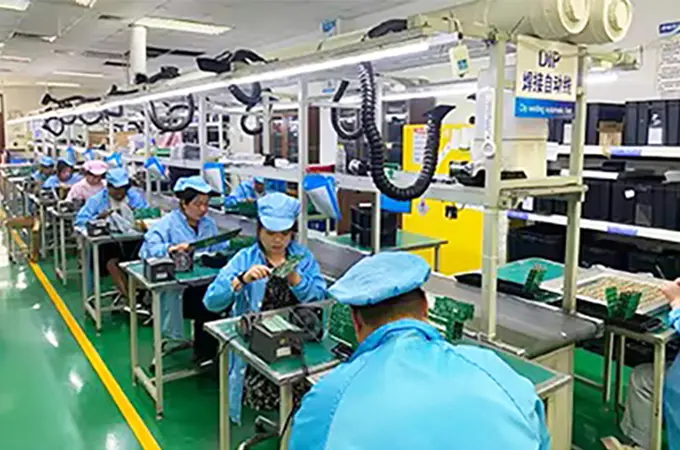
Beijing Yingchuanglihe Electronic Technology Co., Ltd. (YCLI Sensors) is a globally recognized B2B manufacturer specializing in high-performance environmental sensors. Established in 2007, the company has dedicated nearly two decades to R&D, engineering, and manufacturing. From our 1,500-square-meter modern production facility in Beijing, China, we supply international systems integrators, hyperscale data center operators, and global OEM partners with highly reliable environmental tracking technologies.
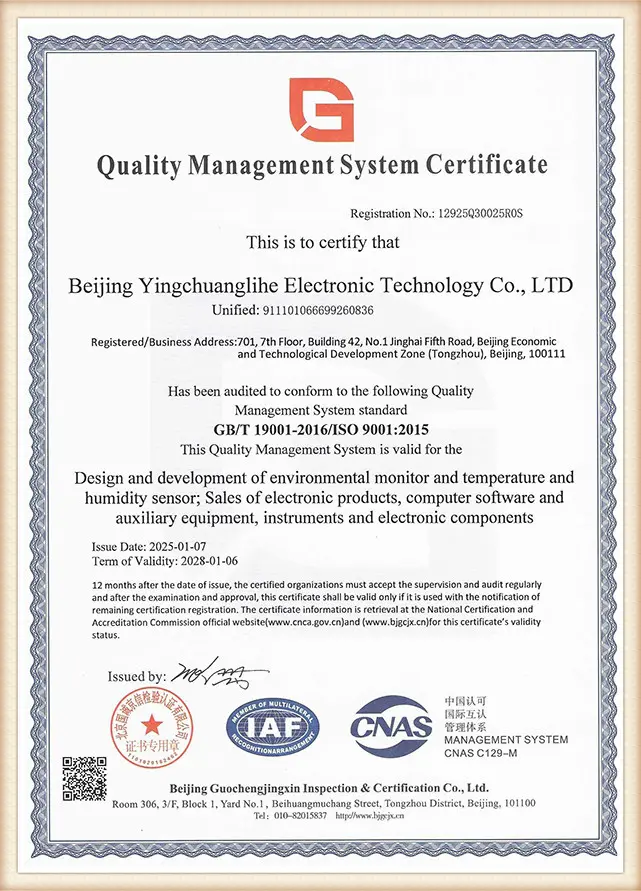
Our core philosophy centers on high data integrity and long-term stability. By leveraging imported chipsets from leading Swiss and German semiconductor manufacturers, YCLI sensors maintain negligible calibration drift over years of continuous deployment. Our manufacturing practices align with ISO 9001, and our products carry full CE, FCC, and RoHS certifications, assuring B2B buyers of superior compliance and build quality.
Tracing Our Development from TCP/IP Terminals to Edge Computing and Beidou Integration Solutions
Company founded in Beijing. Developed the first-generation intelligent environmental monitoring terminal based on TCP/IP network protocol, accompanied by our proprietary central monitoring software.
Partnered with Mocha Software to launch the TH-5939 series of network-managed monitoring hardware, supporting the SNMP protocol natively for IT infrastructure management.
Collaborated with Switzerland's COMLAB to develop the TH-5869 protective Ethernet monitoring terminal, deployed across China's high-speed rail lines (Beijing-Kowloon, Beijing-Shanghai, Wuhan-Guangzhou).
Collaborated with Founder Technology to launch the APEM-6100 Ethernet monitoring device, pioneering the integration of IEEE 802.3af Power over Ethernet (PoE) in environmental sensors.
Partnered with Foxconn to establish our precision sensors as the primary industrial standard for climate tracking within cleanroom assembly workshops.
Partnered with Baidu to launch the next-generation APEM-5900 terminal, deployed at Baidu's Yangquan Data Center. Upgraded software to support multivariable environment matrices.
Launched smart solution systems for telecom enclosures, collaborating with Huawei and China Merchants Huaruan on ETC expressway edge monitoring projects.
Participated in R&D for Beijing's high-level autonomous driving road-test integrated boxes and edge computing gateways, delivering highly reliable hardware systems.
Provided critical telemetry support for advanced AI computing infrastructures. Established divisions with Beijing Enterprises Water Group & Beijing University of Civil Engineering and Architecture, integrating Beidou high-precision tracking and gaining official IDC qualifications.
Tailored Climate Telemetry Systems Protecting Critical Environments Worldwide

Direct rack-level real-time temperature, dew point, and relative humidity monitoring. Supports SNMP and Modbus protocols for easy integration into existing DCIM platforms, preventing thermal runway and condensation risks.

Precision calibration systems supporting micro-differential pressure, TVOC, and formaldehyde tracking. Meets strict GMP and ISO standards, ensuring compliance for pharmaceutical and semiconductor manufacturing.

Compact, durable outdoor enclosure sensors with dual-mode WiFi/wired networks. Built to withstand extreme weather conditions, vibration, and dust ingress (IP65 options available).

Specialized monitoring systems designed to detect toxic gases (like H₂S), atmospheric pressure anomalies, and water ingress. Engineered for utility tunnels and deep subterranean installations.

Heavy-duty, shielded environmental sensors designed to resist high electromagnetic interference (EMI). Engineered for tactical command hubs, server clusters, and ammunition depots.
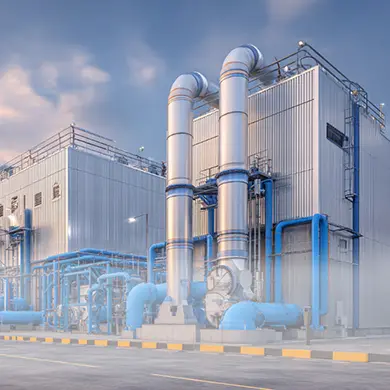
Long-range LoRaWAN and PoE monitoring networks designed for cold-chain facilities, logistics hubs, and archives. Ensures historical record tracking for audits.
B2B Systems Integration: Open Communication Protocols, High-Precision Architecture, and Robust Power Management
Our environmental sensor architecture is built on a highly reliable hardware design, focusing on industrial compatibility and data accuracy. The central network processing unit operates on a 32-bit ARM Cortex microprocessor, handling onboard analytics, sensor data fusion, and protocol translations.
Every sensor from our factory uses Swiss Sensirion capacitive humidity sensors and band-gap temperature sensors. The sensing chips are individually calibrated in ISO 17025 certified climate chambers, writing correction coefficients directly onto the chip's internal non-volatile memory. Temperature accuracy stands at ±0.2°C across the typical server operating band (0°C to 60°C), while relative humidity is verified at ±2.0% RH. This precision prevents false heating warnings in server racks, helping facilities run close to their thermal limit to save energy.
For data communication, our devices offer options for both wired and wireless infrastructure:
The APEM-5930 series supports IEEE 802.3af PoE, combining power and data into a single Cat5e/Cat6 network cable. This design eliminates the need for local AC adapters or auxiliary power runs at every rack. High-voltage isolation protects the internal electronics from power surges, ensuring stable, continuous operation.
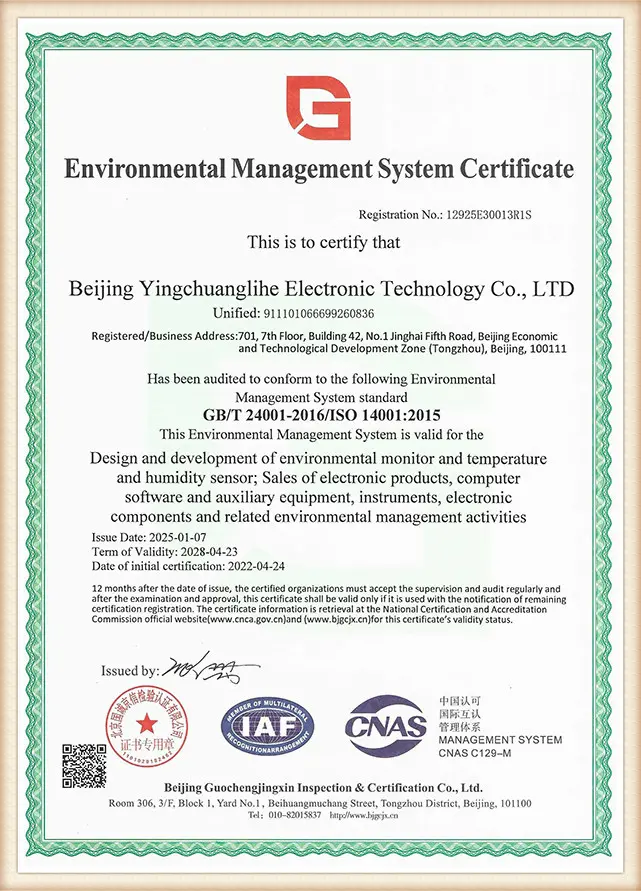
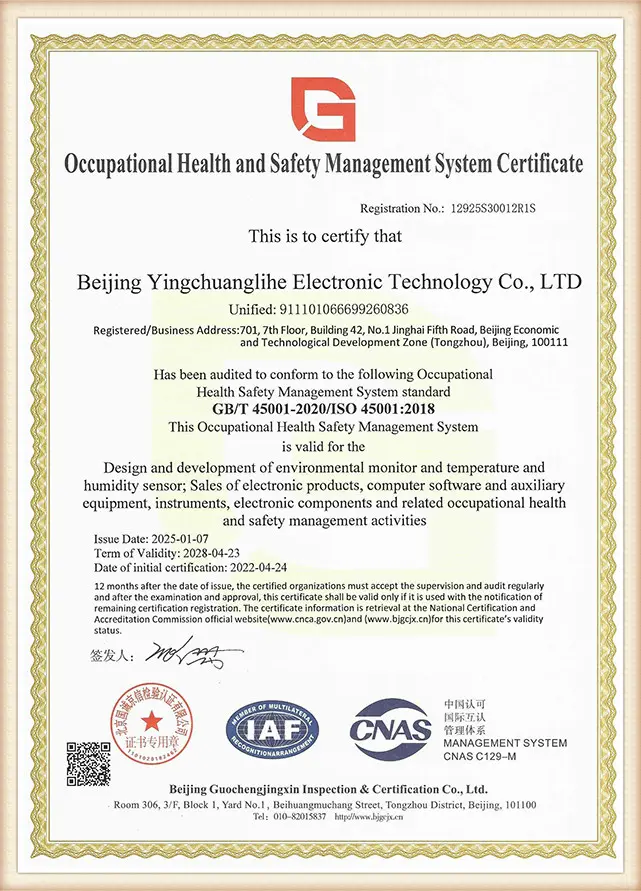
Committed to International Standards, Rigorous Compliance Testing, and Industry Collaboration
ISO 9001 System Certificate
CE Safety Mark
FCC Electromagnetic Compliance
RoHS Environmental Safety
Metrological Calibration Certificate
Utility Model Patent Certificate
Reliability Test Report
IP Grade Ingress Protection
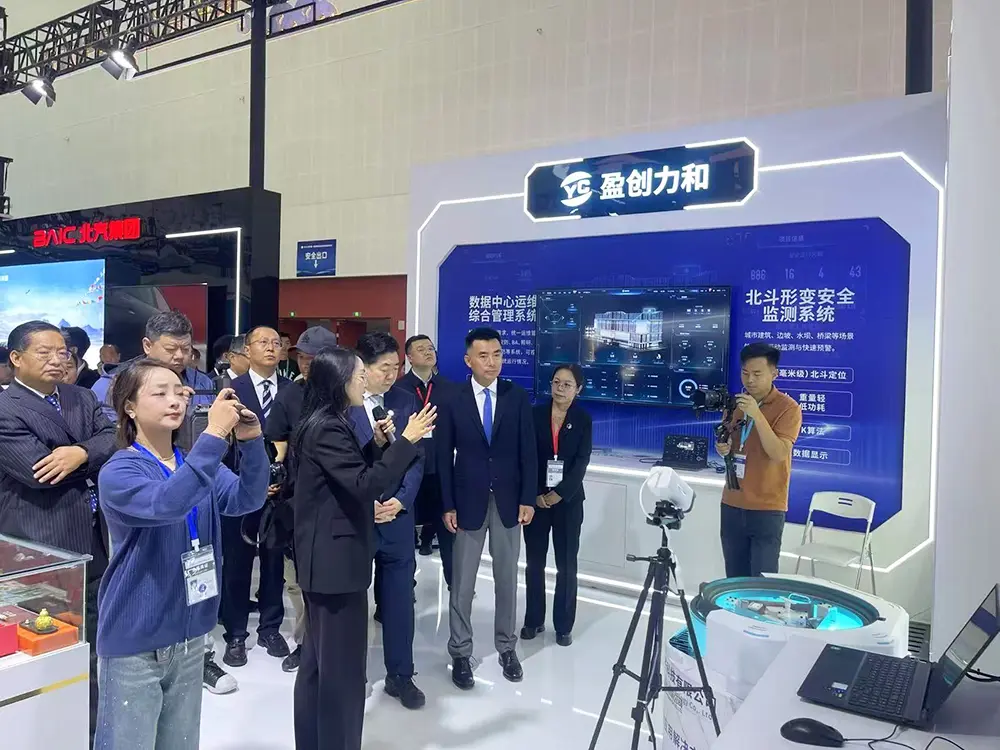
Baidu Data Center Deployment Partnership
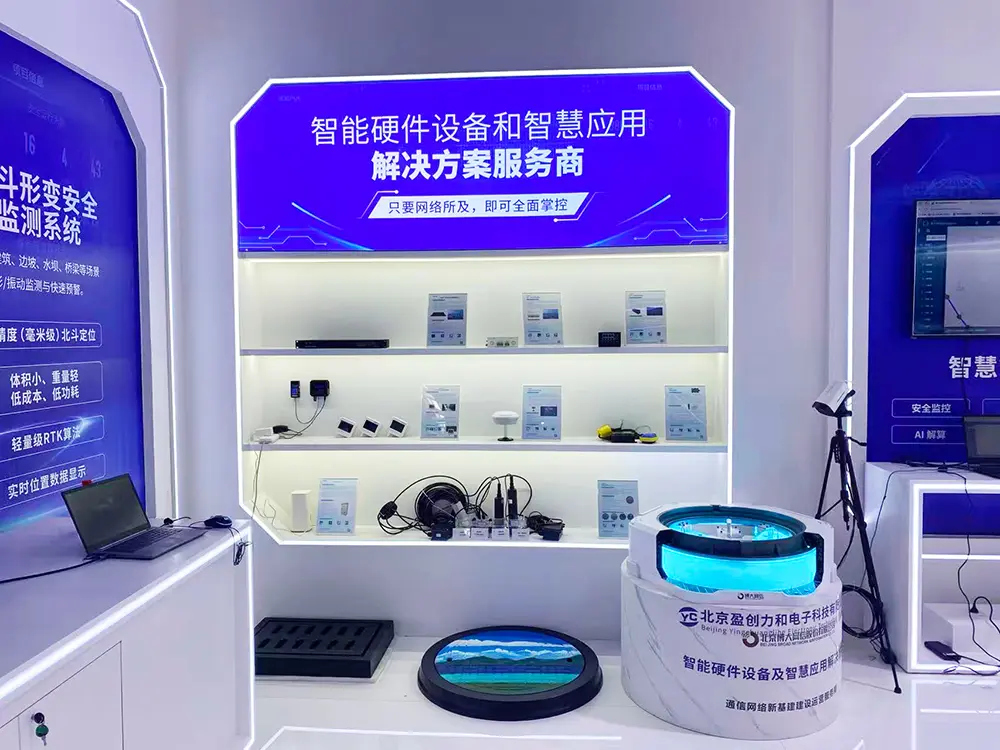
Smart Infrastructure Innovation Expo
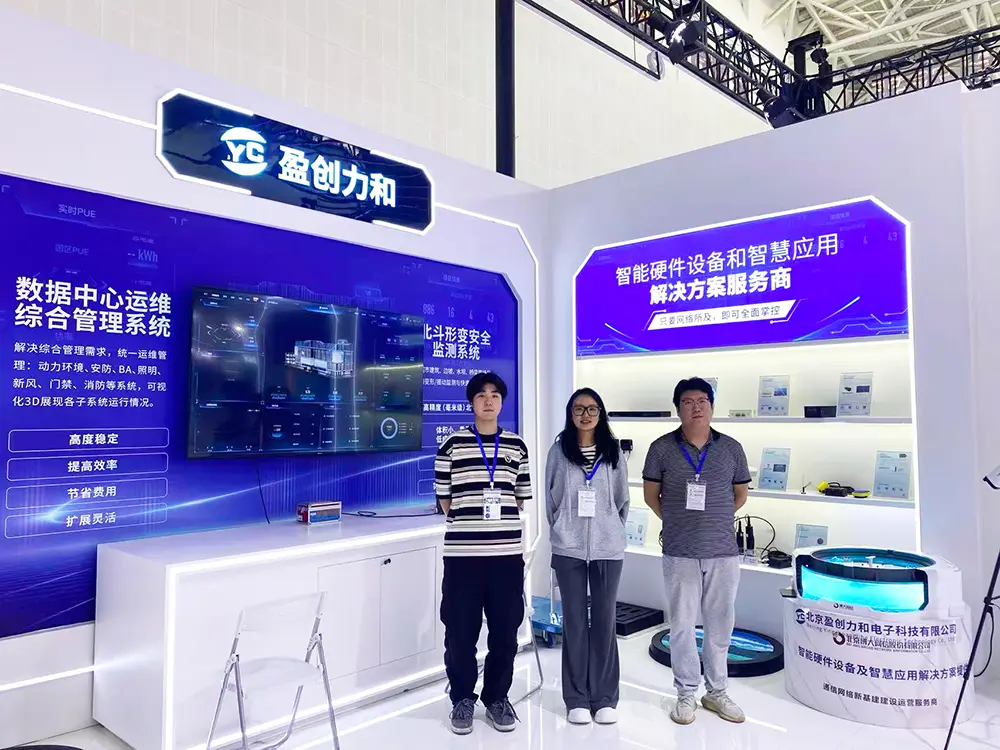
Autonomous Testing Edge Integration
Driving Innovation in Environmental Intelligence: Multi-Gas Matrices, AI Diagnostics, and Liquid Cooling Support
The rise of high-performance AI computing clusters is driving a shift toward liquid-assisted cooling methods (such as direct-to-chip or immersion cooling). This shift introduces new monitoring requirements, moving beyond traditional air temperature and humidity tracking. Next-generation server room environments require specialized sensors that detect liquid leaks, humidity buildup in sealed racks, and coolant pressure anomalies.
Additionally, battery backup rooms are key to maintaining data center uptime. Lead-acid and lithium-ion batteries are vulnerable to thermal runaway, which releases trace gases like Carbon Monoxide (CO) and Volatile Organic Compounds (VOCs) before temperatures spike. Our multi-gas sensors, including the APEM-5930G series, are designed to detect these emissions early, allowing operators to run automated ventilation systems or shut down compromised circuits before fire risk develops.
Our R&D roadmap focuses on integrating edge machine learning directly onto sensor chips. By analyzing local temperature, dew point, and air pressure patterns, these future systems will identify anomalies—such as failing cooling fans or blocked ducts—locally, reducing network overhead and enabling faster preventative maintenance.
Common Technical Queries Addressed by Our Engineering Team
Comprehensive Multi-Parameter Environmental Analyzers and Industrial Data Loggers
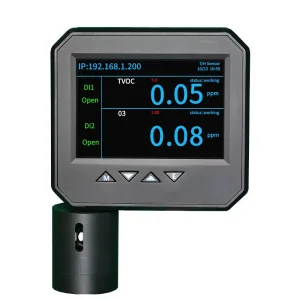
Measures TVOC, Ozone, temperature, and humidity. Designed to help monitor indoor air quality and protect occupants from gaseous pollutants.
Custom Specs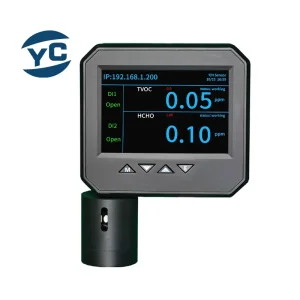
Tracks total volatile organic compounds and formaldehyde levels, helping cleanrooms comply with health and safety standards.
Wholesale RFQ
An Ethernet-connected multi-parameter sensor for monitoring TVOC, Ozone, temperature, and humidity in smart building setups.
Factory Pricing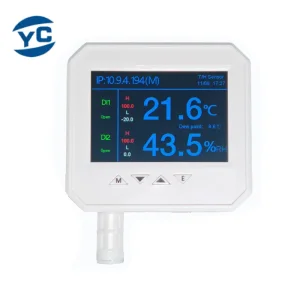
Our standard B2B PoE sensor for temperature and humidity, offering high reliability and easy network integration.
OEM Quotation
Features customizable housing options, cable configurations, and firmwares, designed for bulk commercial installations.
Inquire Customization
A dual-connection sensor supporting both Wi-Fi and wired Ethernet networks, providing connection backup for critical systems.
Get Network Diagram
Our standard factory-model TVOC, Ozone, temperature, and humidity transmitter. Designed for industrial environmental tracking.
Request Bulk Catalog
Fully certified under CE guidelines, this device monitors carbon monoxide, air quality index, temperature, and humidity.
Check Compliance Records YCLH Sensor