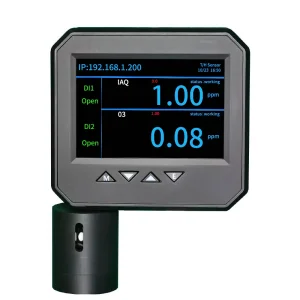
Explore our premium commercial-grade multi-parameter data logging and monitoring interfaces deployed worldwide.
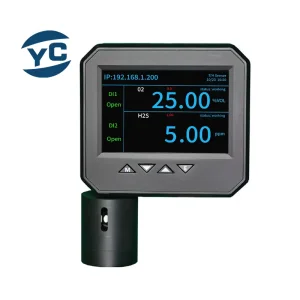
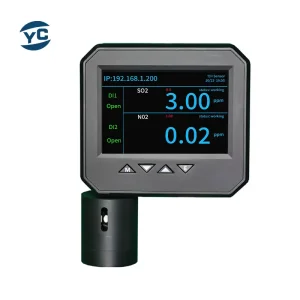
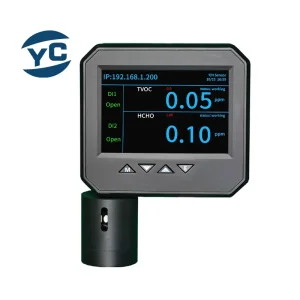
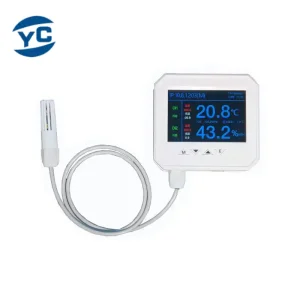
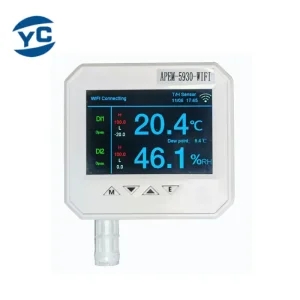
How Multi-Parameter Gas Detection is Reshaping B2B Infrastructure, Facility IoT, and Automated Sanitation Networks Globally.
Traditional timer-based bathroom ventilation is being replaced by closed-loop HVAC automation. By monitoring Ammonia (NH₃), Hydrogen Sulfide (H₂S), and TVOC levels continuously, smart systems activate localized extractors only when concentration thresholds are crossed. This drastically cuts facility energy use while maintaining optimal indoor air quality indexes (AQI).
High relative humidity (frequently exceeding 90% RH in sanitation facilities) presents a major challenge for cheap gas sensors, causing baseline drift and electrochemical saturation. Industrial-grade solutions utilize integrated Swiss temperature & humidity sensor chips (such as Sensirion elements) to dynamic-calibrate the gas sensor cores, ensuring long-term operational stability.
B2B facilities are moving toward cloud-managed software integration. By sending multi-parameter telemetry data (including temperature, dew point, pressure, TVOCs, and specific gases) via Ethernet or Modbus/TCP directly to facility dashboards, building managers can predict traffic peaks, schedule maintenance before odor complaints occur, and trace piping system leakage.
Key technical considerations and compliance baselines for system integrators, HVAC mechanical engineers, and commercial distributors.
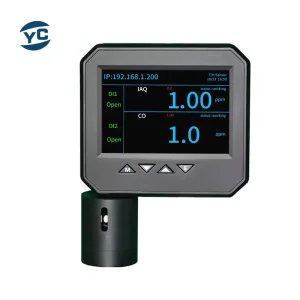
For large-scale infrastructure deployments, such as airports and municipal networks, communication flexibility is critical. Standard RS485 Modbus RTU interface protocols are commonly used for local PLC integration. However, modern building management systems (BMS) require direct Ethernet telemetry using Modbus/TCP, SNMP (for enterprise IT server rack environments), or JSON APIs over HTTP. Yingchuanglihe's APEM series supports these protocols, permitting integration without additional conversion gateways.
Deploying gas sensors inside hundreds of sanitation cubicles requires hardware with low maintenance requirements. Sensor systems must incorporate stable electrochemical cells (for target gases like H₂S, CO, and O₂) and metal oxide semiconductor sensors (for TVOC/HCHO). Key procurement checklists must verify automatic zero-point calibration routines, built-in temperature compensation curves, and field-replaceable probe modules (like the optional probe interfaces in the APEM-5930E) to reduce lifecycle maintenance costs.
Leveraging two decades of industrial environmental telemetry design, manufacturing excellence, and rapid OEM/ODM product customization.
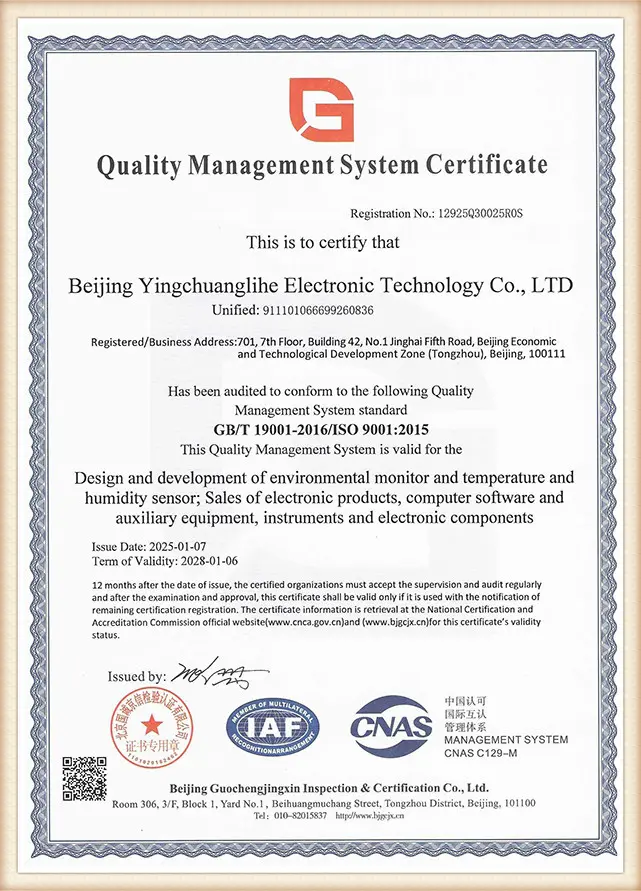
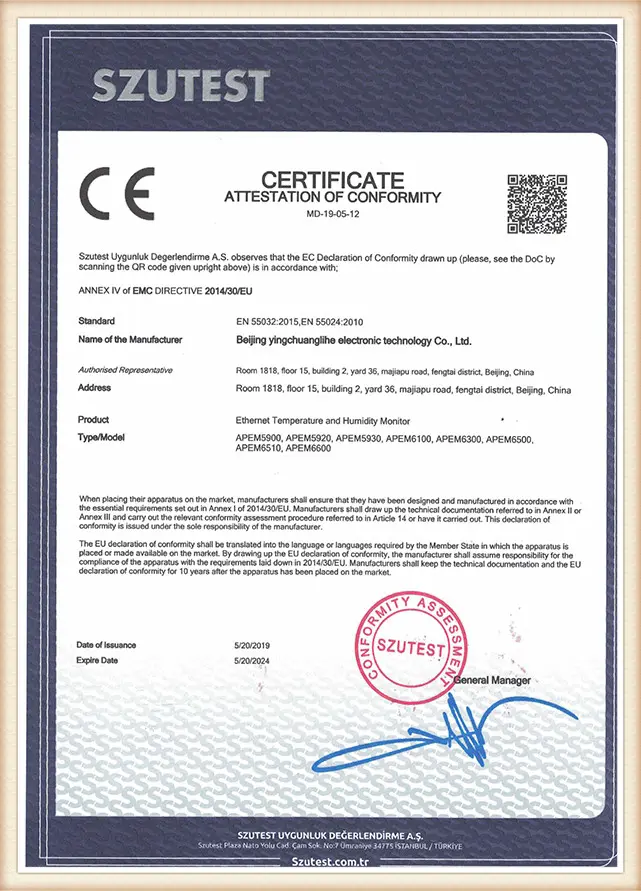
Founded in 2007, Beijing Yingchuanglihe Electronic Technology Co., Ltd. is a high-tech manufacturer specializing in smart environmental telemetry. Operating from a modern facility in Beijing, we design and produce a comprehensive line of temperature, humidity, pressure, and multi-gas sensor nodes. We use high-precision sensor chips imported from Switzerland and Germany to guarantee accuracy and long-term stability. Our manufacturing process conforms to CE, FCC, and RoHS certification standards, and we support OEM/ODM customization services to meet specific project demands.
How our industrial APEM sensor range performs in different applications, from public infrastructure to secure data centers.
Deployed in railway hubs, subway corridors, and highway service rest stops. The sensor array monitors real-time ammonia (NH₃) and hydrogen sulfide (H₂S) levels, activating localized exhaust systems to ensure a clean indoor environment.
Deployed in computing environments, such as Baidu's Yangquan Data Center. These units monitor temperature, humidity, dew point, and trace corrosive gases to protect electronic components from micro-corrosion and static discharge.
Maintains positive/negative differential pressure loops using barometric sensors (such as the APEM-5930P). Ensures cleanroom standards are met while monitoring TVOCs and hazardous gas levels.
A history of technological development, strategic partnerships, and infrastructure project deployments.
Company founded. Developed early TCP/IP-based environmental monitoring terminals and proprietary telemetry management software.
Partnered with Mocha Software to launch the TH-5939 series of SNMP-compliant environmental monitoring modules.
Partnered with Swiss firm COMLAB to supply protective Ethernet monitoring modules (TH-5869) for high-speed rail lines, including the Beijing-Kowloon and Beijing-Shanghai lines.
Partnered with Founder Technology to launch the APEM-6100, one of the earliest environmental monitoring modules to support Power over Ethernet (PoE).
Collaborated with Foxconn to establish our sensor systems as the environmental monitoring standard across their production workshops.
Partnered with Baidu to supply APEM-5900 intelligent environmental terminals for the Baidu Yangquan Data Center. Upgraded software to support multi-parameter monitoring systems.
Launched integrated highway cabinet monitoring systems, deployed in Huawei and China Merchants Huaruan ETC expressway projects.
Designed and supplied edge computing gateways and road test integrated boxes for Beijing's high-level autonomous driving test zones.
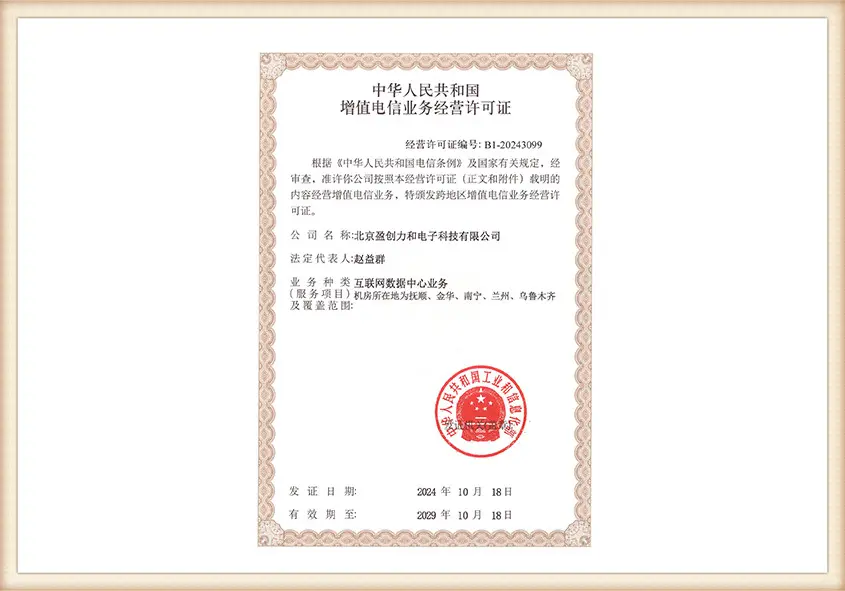
Established divisions with Beijing Enterprises Water Group and Beijing University of Civil Engineering and Architecture for Beidou-integrated pipeline network telemetry. Obtained IDC business qualifications.
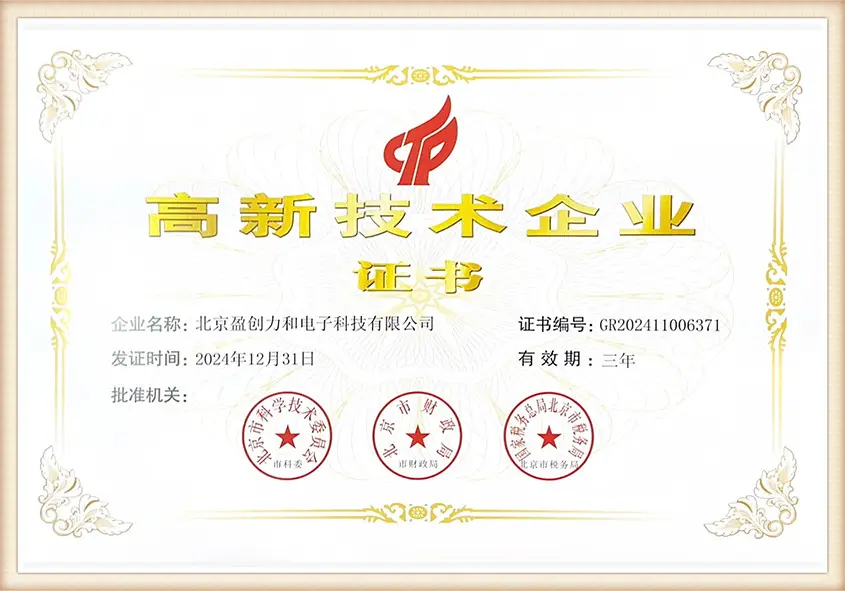
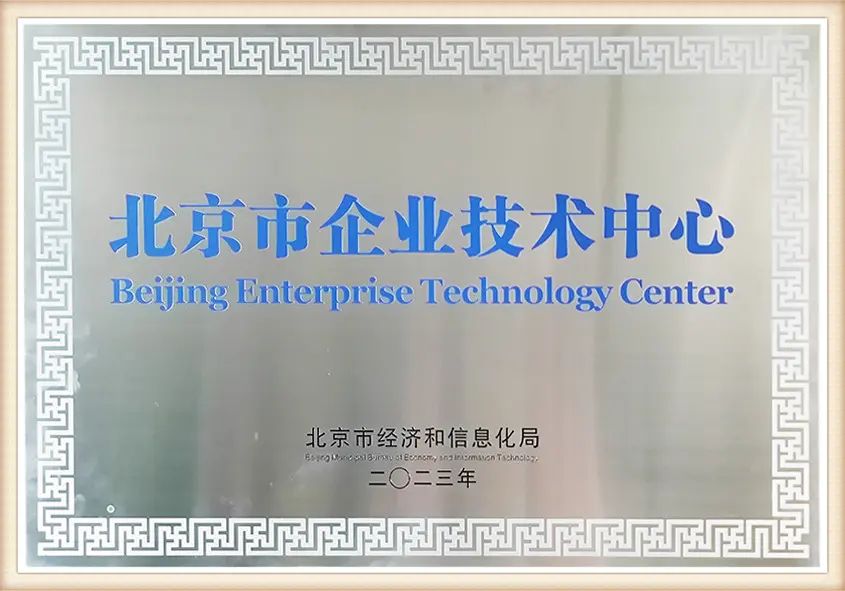
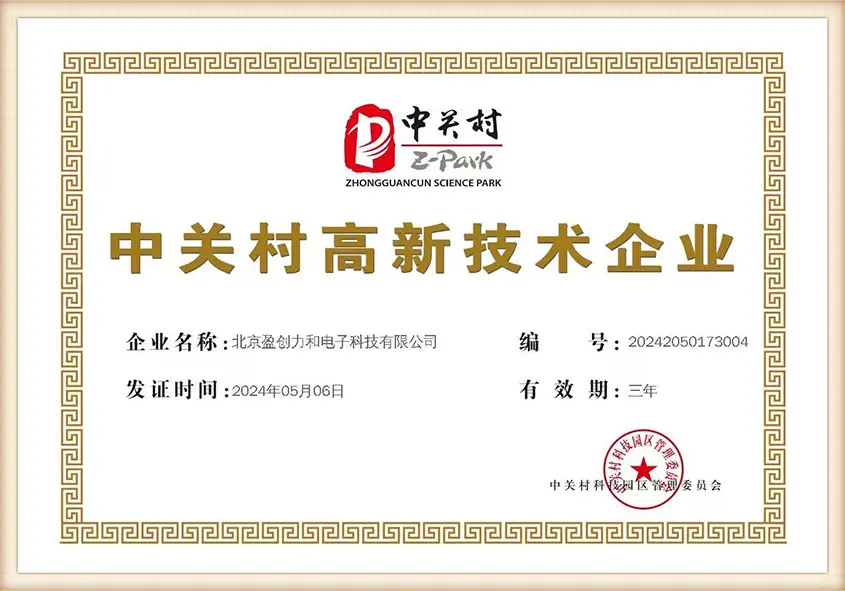
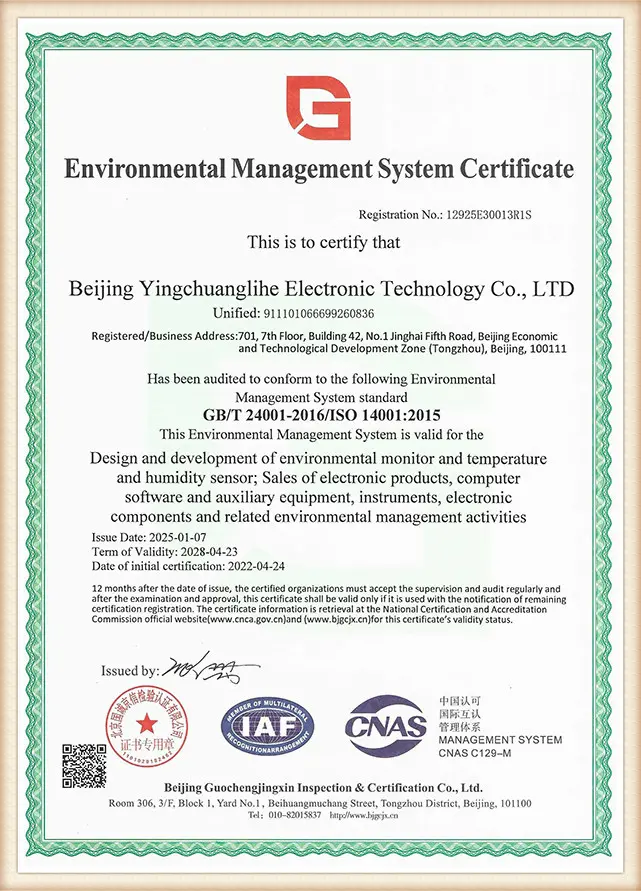
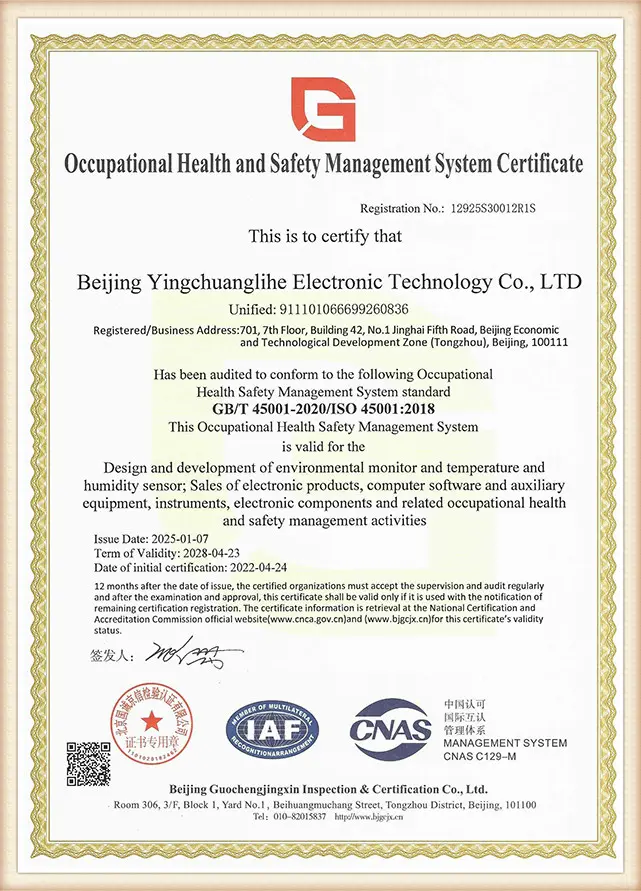
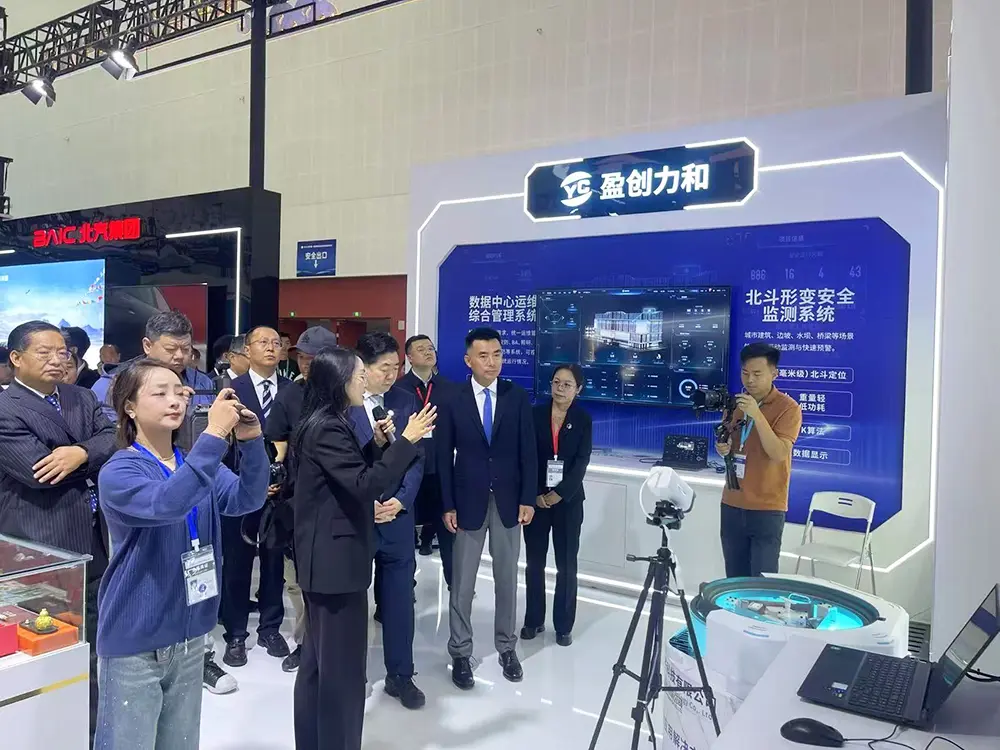
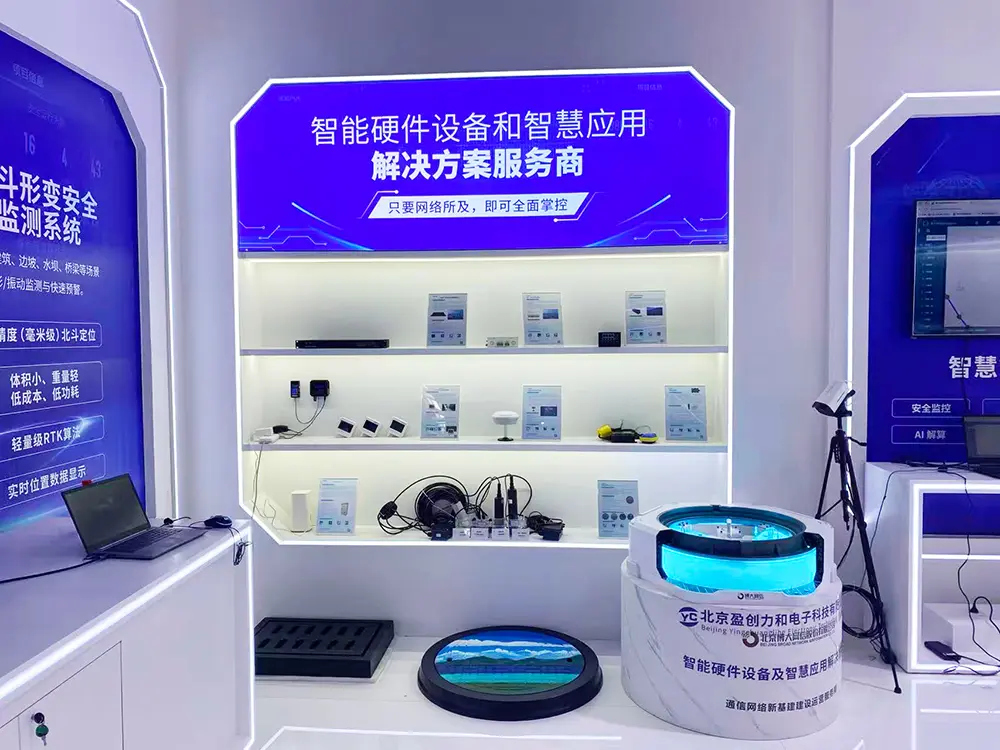
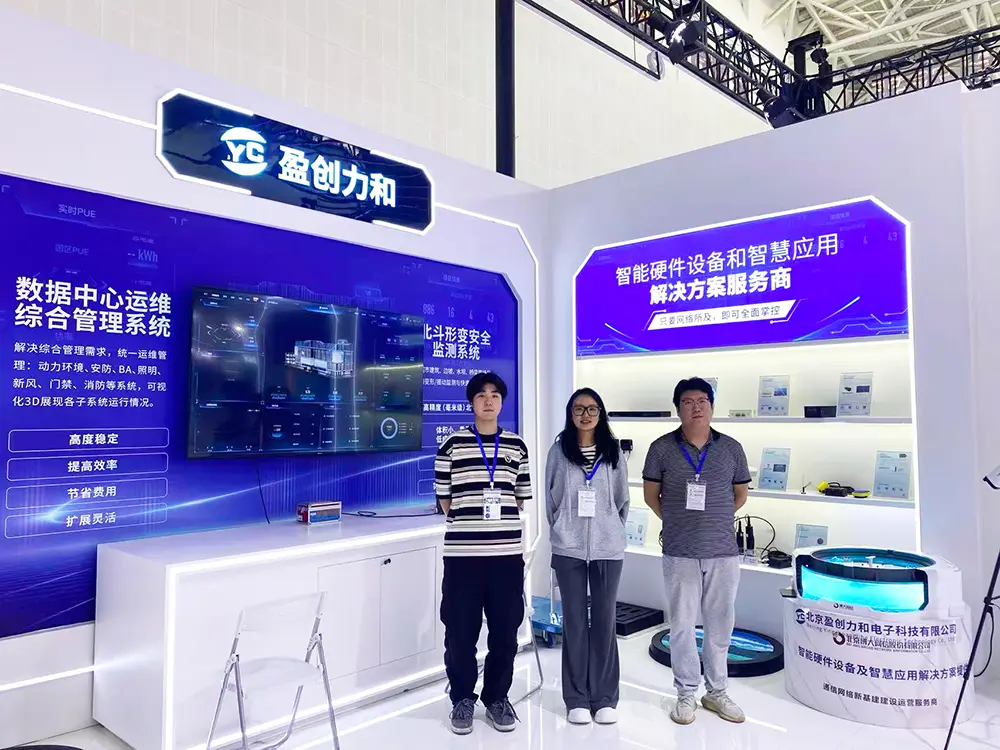
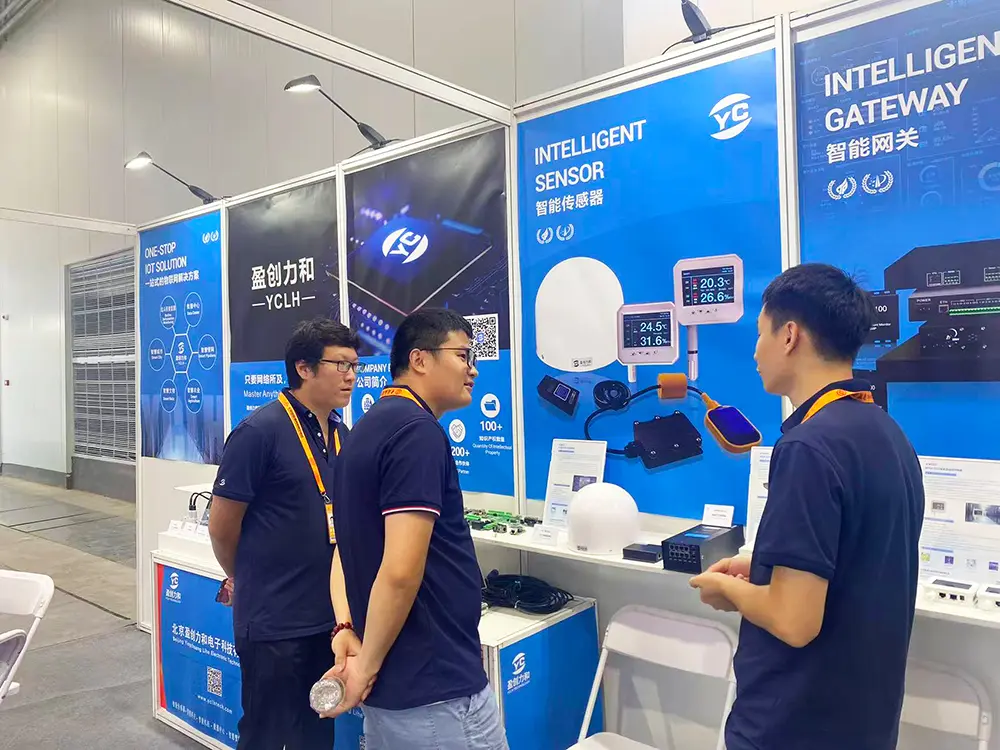
Yingchuanglihe products comply with global standards and are verified through strict quality testing and international industry trade events.
Technical answers regarding sensor integration, calibration schedules, protocols, and deployment best practices.
Additional multi-parameter sensors and telemetry modules for complex commercial HVAC and IoT layouts.
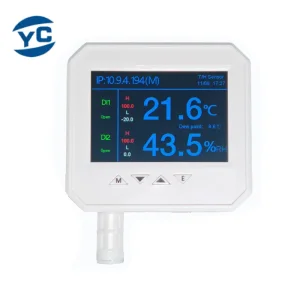
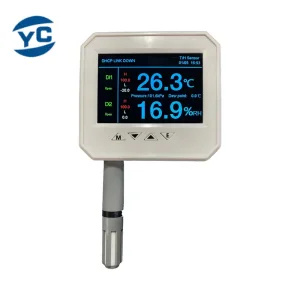
 YCLH Sensor